Mediterranean · Greece
Halkidiki — Sithonia
Gorgonian reefs from 24 m down to 90 m, and an all-levels wreck at 4 to 18 m
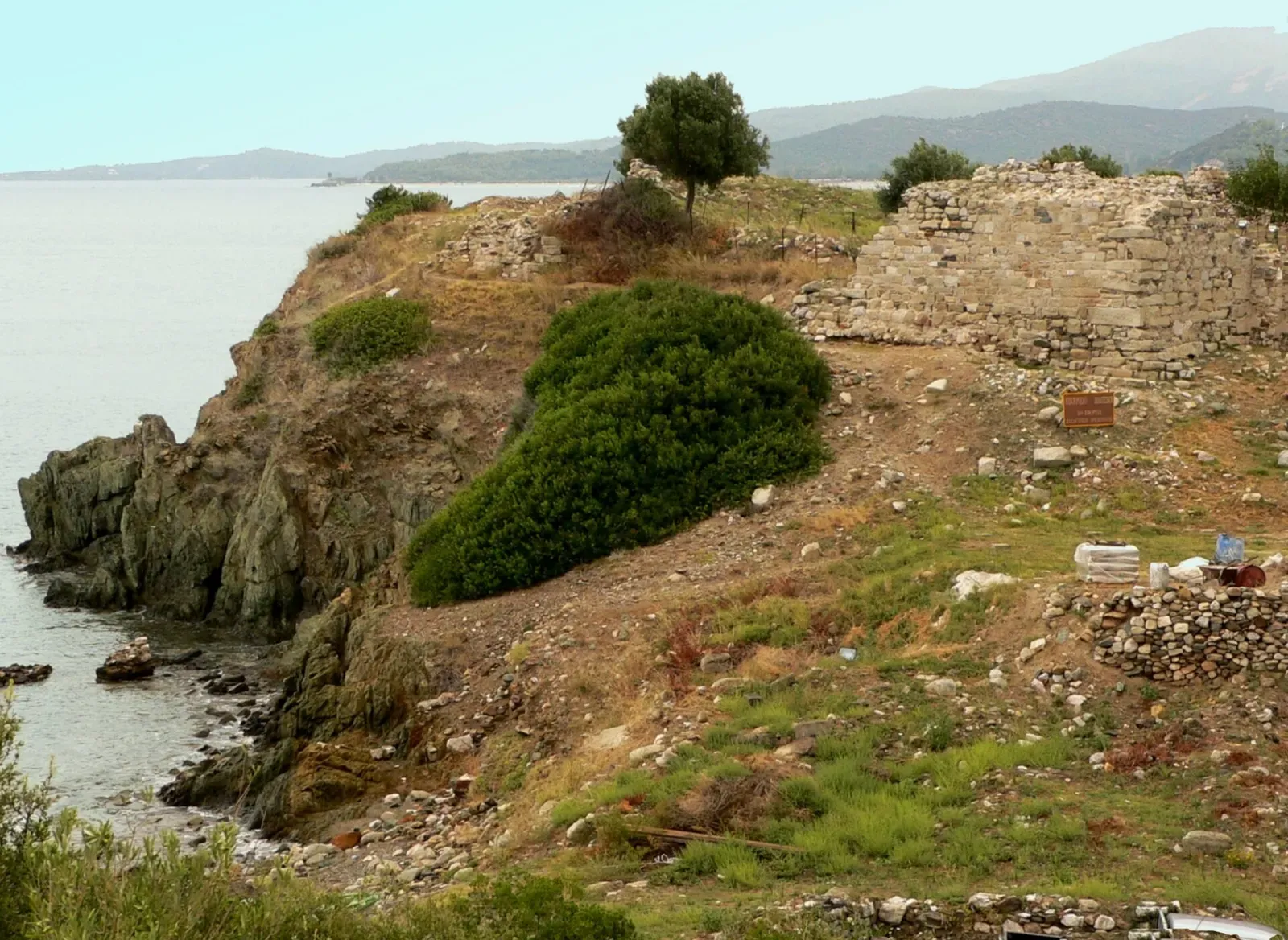
Photo: id.nfero · CC BY-SA 3.0
Sithonia is the middle of Halkidiki's three peninsulas, and the rocky coast around Toroni and Porto Koufo at its southern end holds most of its dive sites, worked from centres at Toroni, Neos Marmaras and Nikiti. The diving is rock reef, cavern and wall: the Ottoman Shipwreck, a 70 m vessel sunk between 1912 and 1922 and broken in two at 4 to 18 m, the Kartalia rock with two swim-throughs on its way down to 60 m, an open cavern entered at 12 m, and a set of gorgonian reefs that begin at 24 to 33 m and continue to 70 and 90 m for deep-certified divers.
About diving in Halkidiki — Sithonia
Four dive centres work the peninsula: Azure at Toroni, Nomad at Neos Marmaras, Oceanic at Nikiti and Ormos Panagias, and Nikiti Diving Center. A day is a mix of shore and boat. Korakas is a beach entry over sand that gives way to rock, with a 10 m maximum, and Deep Korakas also starts from shore, crosses a Posidonia meadow at 8 m and reaches rock at 24 m and a floor at 44 m. Offshore reefs such as Azapiko Nets and Volcano lie 300 to 350 m off the coast; at Azapiko the boat anchors in 5 m and the dive works along the reef to 20 m on the inner side or 35 m on the outer. Guided trips for certified divers run daily, and the offshore pinnacle at Vourvourou is a 20-minute boat ride.
Away from the beaches the bottom is rock. Manitari is a mushroom-shaped reef from 3 to 33 m, and Anemones City runs from 7 to 25 m under anemones and nudibranchs. Erica Cave is an open cavern entered at 12 m, about 40 m long and 10 m wide, where shrimps, crayfish and lobsters breed among sardines, groupers, morays and scorpionfish. Kartalia is a menhir-shaped rock 30 m tall reaching 60 m, with swim-throughs of 7 and 8 m, and the Kaminada chimney nearby is entered at 16 m and exited at 8 m. Below are the gorgonian reefs: yellow coral from 33 m at Nemesis, Pagona from 24 to 70 m, and Erica Gorgonians and Armatomenos from 27 and 30 m down to 90 m, yellow fans first and red ones deeper.
The shallow sites make this a straightforward place to learn or to bring a family: Destinika's gentle bottom is used for Try Scuba and Junior Open Water, and Korakas takes snorkellers and freedivers as well as divers. The deep sites are the reverse. Pagona, Erica Gorgonians and Armatomenos are labelled Deep Diver or Advanced, the Vourvourou pinnacle usually carries current and is listed for advanced and expert divers, and Nemesis runs from 7 m straight on to 70 m and Pagona from 24 m, so the plan has to stop where the certification stops, not where the reef does.
Three named spots are off limits to scuba: Toroni Castle, the Peristeronisi islet a short swim from Toroni, and Antikoufo are listed as protected marine areas where only snorkelling is allowed, and fishing is banned at the castle as well. The Ottoman Shipwreck is sold as an ordinary all-levels dive and as a snorkelling boat trip. Two smaller hazards: old fishing nets drape the Azapiko reef, where they now shelter fish, and the Kriaritsi rocks are scattered with sea urchins.
When to dive Halkidiki — Sithonia
| Jan | Feb | Mar | Apr | May | Jun | Jul | Aug | Sep | Oct | Nov | Dec |
|---|---|---|---|---|---|---|---|---|---|---|---|
| Off-season | Off-season | Off-season | Fair | Good | Prime | Prime | Prime | Prime | Good | Off-season | Off-season |
Boat trips and Try Scuba run April to October; courses are sold year-round, but the sea sits around 14 °C from January to March.
Dive types & marine life
Groupers, morays and scorpionfish hold the crevices, and Erica Cave is a nursery for shrimps, crayfish and lobsters. The net-covered Azapiko reef has octopus, stingrays, seabream and red mullet; the shallow reefs carry anemones and nudibranchs. Yellow gorgonians start around 30 m and red ones deeper. Turtles, tuna and seals are reported at Pagona, and lionfish have appeared at Kaminada.
- Reef
- Wall
- Wreck
- Cave & cavern
- Coral garden
- Groupers
- Octopus & cuttlefish
- Stingrays
- Nudibranchs
- Macro critters
- Reef fish swarms
Notable dive sites in Halkidiki — Sithonia
Reef
Yellow gorgonians from 30 m, red ones deeper, on to 90 m
Reef
Old fishing nets turned into a reef, with congers and groupers underneath
Sand slope
Shore entry to a 44 m floor across a Posidonia meadow
Cave & cavern
A 40 m long cavern where shrimps, crayfish and lobsters breed
Reef
A reef fully draped in gorgonians from 27 m down
Cave & cavern
A chimney you enter at 16 m and leave at 8 m
Reef
Two swim-throughs, 7 m and 8 m long, in one rock
Wall
A wall off an uninhabited goat island, starting at 5 m
Reef
A mushroom-shaped reef from 3 m to 33 m in the open Aegean
Reef
Large groupers on a reef running from 7 m to 70 m
Wreck
A wreck of an estimated 70 m, broken in two, lying between 4 and 18 m
Gorgonian-covered seabed from 24 m, groupers and dentex
Getting there
Fly to Thessaloniki (SKG). Toroni at the southern end of Sithonia is 1.5 to 2 hours by car or about 3 hours on the KTEL Chalkidikis bus. The centres sit in the coastal towns a diver would drive to anyway: Toroni, Neos Marmaras, Nikiti and Ormos Panagias.
Photos from Halkidiki — Sithonia
id.nfero · CC BY-SA 3.0
id.nfero · CC BY-SA 3.0
I've Got It On Film! · CC BY 2.0
Photo credits
- Ancient stone walls on a rocky headland above the sea at Toroni by id.nfero, CC BY-SA 3.0, via Wikimedia Commons
- Ancient ruined walls overlooking Toroni harbour with a boat and green hills by id.nfero, CC BY-SA 3.0, via Wikimedia Commons
- Olive trees among stone ruins with wooded hills behind Toroni by id.nfero, CC BY-SA 3.0, via Wikimedia Commons
- A blue nudibranch perched on a hydroid-covered rope underwater by I've Got It On Film!, CC BY 2.0, via Openverse
Similar destinations
A B-17 bomber upright on the sand at 25 m below the citadel
Reserve reef diving at Cerbère-Banyuls, France's first marine reserve

Nineteen uninhabited islands and light-filled caves off Mallorca

.jpg)
.jpg)
.jpg)
Granite seamounts rising to the surface off Sardinia's south-east corner