
Coral Triangle · Indonesia
Derawan & Sangalaki
Turtles nest on Derawan's beaches; mantas cycle through Sangalaki's cleaning station.
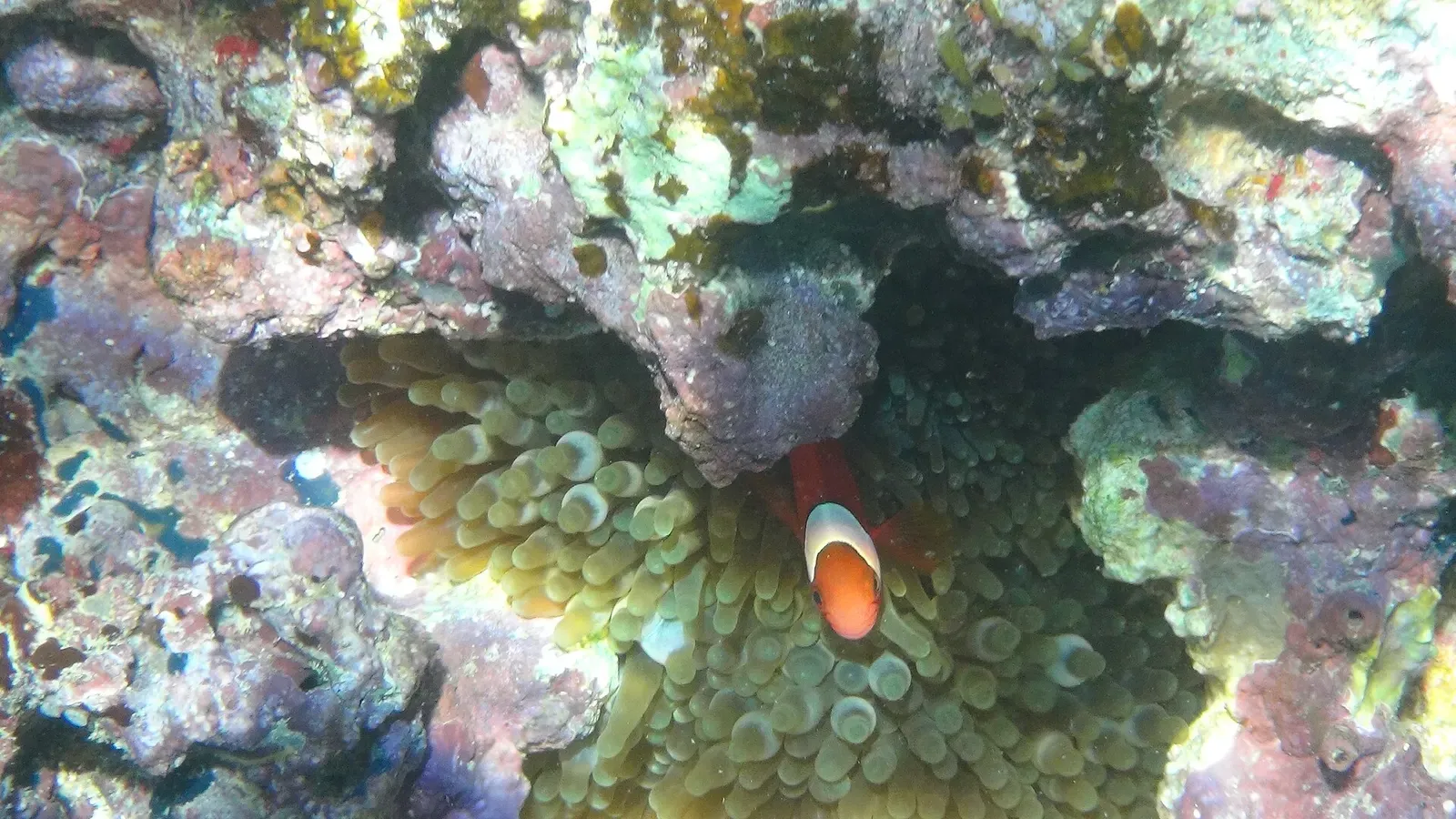
Photo: Fahrian44 · CC BY-SA 4.0
Derawan, Sangalaki, Maratua, and Kakaban form a cluster of islands off East Kalimantan known for a resident population of green turtles that nest on Derawan's beaches and a manta ray cleaning station at Sangalaki. Nearby Kakaban Island holds a landlocked lake of stingless jellyfish, snorkeled rather than dived to protect the fragile ecosystem. Maratua's fringing walls add drift diving with barracuda and jacks to the area's mix of reef and muck sites.
About diving in Derawan & Sangalaki
The islands are far enough apart that a day is planned around boat runs rather than sites. From Derawan, Sangalaki and Kakaban are open-water crossings in a fast boat, so a typical day is two dives out and one on the way home, with surface intervals spent aboard or on a beach. Operators based on Maratua have the walls on their doorstep and run shorter trips instead. The bases differ in feel as much as in position: Derawan is a working village with guesthouses and warungs, while the Maratua resorts are largely self-contained.
Nothing here is deep, and each island dives differently. Derawan's shallows are seagrass, sand and low coral where turtles graze and small subjects sit in the rubble under the jetty, and it is the easiest place to simply walk in. At Sangalaki the technique is to settle on the sand at the edge of the shallows and stay put, since swimming after a feeding ray is the reliable way to lose it. Maratua is the outlier: a fringing wall along the atoll rim with a channel into the lagoon, where tidal exchange sets up drifts and fish stack at the corners.
The plankton that brings rays in to Sangalaki is also what greens the water, so visibility swings between sites and days and wide-angle work has to be planned around the animals rather than the conditions. Kakaban is dived on its outer wall, while the lake sits inside the island rim, reached on foot up a plank staircase and down a boardwalk, and is usually fitted into a surface interval. The area suits divers who want turtles, rays and an unpolished island trip more than reef spectacle, and who accept that a fair share of the holiday goes on getting there.
Best time to dive Derawan & Sangalaki
| Jan | Feb | Mar | Apr | May | Jun | Jul | Aug | Sep | Oct | Nov | Dec | |
|---|---|---|---|---|---|---|---|---|---|---|---|---|
| Season | Fair | Fair | Good | Prime | Prime | Prime | Prime | Good | Good | Good | Fair | Fair |
| Sea surface | 29°C84°F | 29°C84°F | 29°C84°F | 30°C86°F | 30°C86°F | 30°C86°F | 29°C84°F | 29°C84°F | 29°C84°F | 29°C84°F | 29°C84°F | 29°C84°F |
| Daytime high | 29°C84°F | 29°C84°F | 29°C84°F | 29°C84°F | 30°C86°F | 30°C86°F | 29°C84°F | 30°C86°F | 30°C86°F | 30°C86°F | 30°C86°F | 29°C84°F |
| Rain | 264 mm10.4 in | 207 mm8.1 in | 226 mm8.9 in | 188 mm7.4 in | 233 mm9.2 in | 155 mm6.1 in | 166 mm6.5 in | 162 mm6.4 in | 177 mm7.0 in | 198 mm7.8 in | 205 mm8.1 in | 264 mm10.4 in |
| Jan | Feb | Mar | Apr | May | Jun |
|---|---|---|---|---|---|
| Fair | Fair | Good | Prime | Prime | Prime |
| Sea surface | |||||
| 29°C84°F | 29°C84°F | 29°C84°F | 30°C86°F | 30°C86°F | 30°C86°F |
| Daytime high | |||||
| 29°C84°F | 29°C84°F | 29°C84°F | 29°C84°F | 30°C86°F | 30°C86°F |
| Rain | |||||
| 264 mm10.4 in | 207 mm8.1 in | 226 mm8.9 in | 188 mm7.4 in | 233 mm9.2 in | 155 mm6.1 in |
| Jul | Aug | Sep | Oct | Nov | Dec |
|---|---|---|---|---|---|
| Prime | Good | Good | Good | Fair | Fair |
| Sea surface | |||||
| 29°C84°F | 29°C84°F | 29°C84°F | 29°C84°F | 29°C84°F | 29°C84°F |
| Daytime high | |||||
| 29°C84°F | 30°C86°F | 30°C86°F | 30°C86°F | 30°C86°F | 29°C84°F |
| Rain | |||||
| 166 mm6.5 in | 162 mm6.4 in | 177 mm7.0 in | 198 mm7.8 in | 205 mm8.1 in | 264 mm10.4 in |
2011–2025 averages. Sea surface: NOAA Coral Reef Watch, measured at the surface, so deeper water can run colder. Daytime high and rain: NASA POWER.
April–October dry season gives the clearest water and most reliable manta encounters at Sangalaki.
Best months: April, May, June, July
Derawan & Sangalaki water temperature and weather by month
The sea surface stays between 29 and 30 °C (84–86 °F) all year. Rain falls through the year, about 200 mm (7.9 in) a month on average, with January the wettest. Daytime highs sit around 29 °C (84 °F) all year. The coldest water here is about 27 °C (81 °F), so pack a 3 mm, or even a 2 mm, suit.
Dive types & marine life
Green turtles are constant in Derawan's shallows and turn up on any single dive, year-round. Mantas pass through Sangalaki in most months, with April to October the more dependable stretch and also the calmer one for crossings. Maratua's channel corners hold barracuda and jacks on the tidal exchange, and Kakaban's lake holds several jellyfish species whose sting is too weak to feel.
- Reef
- Drift
- Muck & macro
- Manta rays
- Sea turtles
- Stingless jellyfish
- Barracuda
- Trevally & jacks
- Reef fish swarms
Best dive sites in Derawan & Sangalaki
Channel & pass
Hook in on the channel edge and let the current run
Wall
Slope to a 40-50 m wall, finished on the reef top next door
Wall
Pygmy seahorses on the wall, marlin out in the blue
Wall
Bumphead parrotfish schools and a wall of gorgonian sea fans
Reef
Feather stars and sponges on a slope to 40 m
Dived on current for eagle rays, threshers and whale sharks
Reef top at 5-10 m, then a wall to a 70 m sand floor
Muck & macro
Mandarinfish at dusk, then straight into the night dive
Wall
Reef sharks resting on the sand inside the cave
Six or seven reef mantas feeding over the coral steps
Wall
Dense hard and soft coral on a wall to 25 m
Reef
Stingrays on the sand plateau at the atoll's southwest tip
Sleeping turtles at low tide on the west-coast slope
Wall
Reef sharks on the wall, a sunk house-reef boat at 16-21 m
Turtle Traffic Jam (Derawan)
Shallow reef crowded with resident green turtles.
Blue Trigger Wall (Maratua)
Coral wall named for its resident triggerfish.
How to get to Derawan & Sangalaki
Most people fly to Berau via Balikpapan or Jakarta, drive out to the coast at Tanjung Batu and take a speedboat across to Derawan or Maratua; Tarakan is the alternative gateway, and Maratua's own airstrip is served only intermittently. Beds and dive centres are on Derawan and Maratua, while Sangalaki and Kakaban are day trips with no visitor accommodation.
Dive videos
Magical Mantas of Sangalaki [4K] | Indonesia from Below (S01E02) | SZtv · SZtv on YouTube
The World’s Best Dive Site: Barracuda Point, Kakaban [4K] | Indonesia from Below (S01E07) | SZtv · SZtv on YouTube
Photo credits
- A pair of pink anemonefish peering out from the swaying tentacles of a large sea anemone by Fahrian44, CC BY-SA 4.0, via Wikimedia Commons
Embed
Run a dive centre, club or blog? Embed this map of 12 dive sites near Derawan & Sangalaki on your own page.
In The Logbook
- Where to see reef sharks on your first divesBig animals · 14 min read
- Where to dive with sea turtlesBig animals · 15 min read
- When does coral spawn? The moon's calendarBig animals · 10 min read
- When is slack water? Tides for diversOcean science · 7 min read
- Where to dive with manta rays, month by monthBig animals · 8 min read
Similar destinations

Community-run whale shark tourism, and mantas queueing in Ticao Pass

Step off a jetty into the world's largest lagoon, or cross to open ocean

Drift dives through some of the richest marine life on Earth

Walls from 5 m past 60, and a dive base of its own