
Australia & New Zealand · Australia
Ningaloo Reef
Whale sharks gather along the reef edge every autumn after coral spawning.
Photo: Sylke Rohrlach · CC BY-SA 2.0
Ningaloo is a 260-kilometer fringing reef on Western Australia's remote coast, close enough to shore that many sites are reached by swimming or a short boat ride from the beach. Whale sharks gather here from March to July when coral spawning triggers a plankton bloom, and the same channels host year-round manta ray cleaning stations, with migrating humpback whales passing close to the reef edge from July through October.
About diving in Ningaloo Reef
Diving here is unusually low-friction. The reef runs close in along the coast, so day boats leave Exmouth or Coral Bay in the morning, reach a site in minutes rather than hours, and are often back before the afternoon sea breeze gets up, which makes an early start matter more than it does on the east coast. Shore entries exist as well, though the honest picture is that the lagoon inside the reef is shallow and mostly rewards snorkelling, while most sites worth a tank are reached by boat or from a handful of specific access points.
Three settings sit side by side. Inside the reef is a wide sand-and-bommie lagoon, calm and bright, where turtles graze and isolated coral heads stand on white sand. The reef edge is cut by channels where water moves in and out with the tide, and that is where the cleaning stations are and where drifts get run. North of Exmouth, around the cape and out at the Muiron Islands, the ground changes again into limestone ledges, overhangs and sponge-covered rock that behave nothing like the coral further south.
The whale shark season is run as a snorkel operation rather than a dive: spotter aircraft locate the animals, the boat drops swimmers ahead of one, and the group swims alongside until it goes deep or the turn ends. The humpback swims later in the year are licensed much the same way, and Coral Bay generally runs its manta encounters as snorkel tours too. On scuba, the equivalent set piece is a manta cleaning station, where you settle on the sand beside a coral head and wait while rays circle in and hold over it, occasionally several at once, close enough that the trick is staying still.
It suits divers who want easy conditions and large animals without deep or demanding profiles, and it works unusually well for mixed groups, since a snorkeller sees a fair share of what a diver does here. That extends to anyone travelling with children or non-divers, because the beaches and Cape Range National Park behind them are part of the trip rather than filler. Divers chasing dense hard-coral scenery or serious wreck diving will find the ratio wrong; the interest at Ningaloo is what swims past, and the reef is the backdrop.
Best time to dive Ningaloo Reef
| Jan | Feb | Mar | Apr | May | Jun | Jul | Aug | Sep | Oct | Nov | Dec | |
|---|---|---|---|---|---|---|---|---|---|---|---|---|
| Season | Fair | Fair | Good | Prime | Prime | Prime | Prime | Prime | Prime | Good | Good | Fair |
| Sea surface | 27°C81°F | 28°C82°F | 28°C82°F | 28°C82°F | 27°C81°F | 25°C77°F | 24°C75°F | 23°C73°F | 23°C73°F | 24°C75°F | 24°C75°F | 25°C77°F |
| Daytime high | 34°C93°F | 35°C95°F | 35°C95°F | 33°C91°F | 30°C86°F | 27°C81°F | 26°C79°F | 27°C81°F | 29°C84°F | 30°C86°F | 31°C88°F | 34°C93°F |
| Rain | 31 mm1.2 in | 27 mm1.1 in | 59 mm2.3 in | 27 mm1.1 in | 38 mm1.5 in | 65 mm2.6 in | 15 mm0.6 in | 9 mm0.4 in | 3 mm0.1 in | 0 mm0.0 in | 6 mm0.2 in | 2 mm0.1 in |
| Jan | Feb | Mar | Apr | May | Jun |
|---|---|---|---|---|---|
| Fair | Fair | Good | Prime | Prime | Prime |
| Sea surface | |||||
| 27°C81°F | 28°C82°F | 28°C82°F | 28°C82°F | 27°C81°F | 25°C77°F |
| Daytime high | |||||
| 34°C93°F | 35°C95°F | 35°C95°F | 33°C91°F | 30°C86°F | 27°C81°F |
| Rain | |||||
| 31 mm1.2 in | 27 mm1.1 in | 59 mm2.3 in | 27 mm1.1 in | 38 mm1.5 in | 65 mm2.6 in |
| Jul | Aug | Sep | Oct | Nov | Dec |
|---|---|---|---|---|---|
| Prime | Prime | Prime | Good | Good | Fair |
| Sea surface | |||||
| 24°C75°F | 23°C73°F | 23°C73°F | 24°C75°F | 24°C75°F | 25°C77°F |
| Daytime high | |||||
| 26°C79°F | 27°C81°F | 29°C84°F | 30°C86°F | 31°C88°F | 34°C93°F |
| Rain | |||||
| 15 mm0.6 in | 9 mm0.4 in | 3 mm0.1 in | 0 mm0.0 in | 6 mm0.2 in | 2 mm0.1 in |
2011–2025 averages. Sea surface: NOAA Coral Reef Watch, measured at the surface, so deeper water can run colder. Daytime high and rain: NASA POWER.
Whale sharks aggregate mid-Mar–Jul after coral spawning; humpback whales pass close to the reef Jul–Oct; manta rays are present year-round.
Best months: April, May, June, July, August, September
Ningaloo Reef water temperature and weather by month
The sea surface runs from 23 °C (73 °F) in August to 28 °C (82 °F) in April. It is 24 °C (75 °F) or warmer from October to July. Most rain falls from January to June, peaking at about 70 mm (2.8 in) in June; it stays largely dry from August to December. Daytime highs reach 35 °C (95 °F) in February and drop to 26 °C (79 °F) in July. The coldest water here is about 21 °C (70 °F), so pack a 5 mm suit.
Dive types & marine life
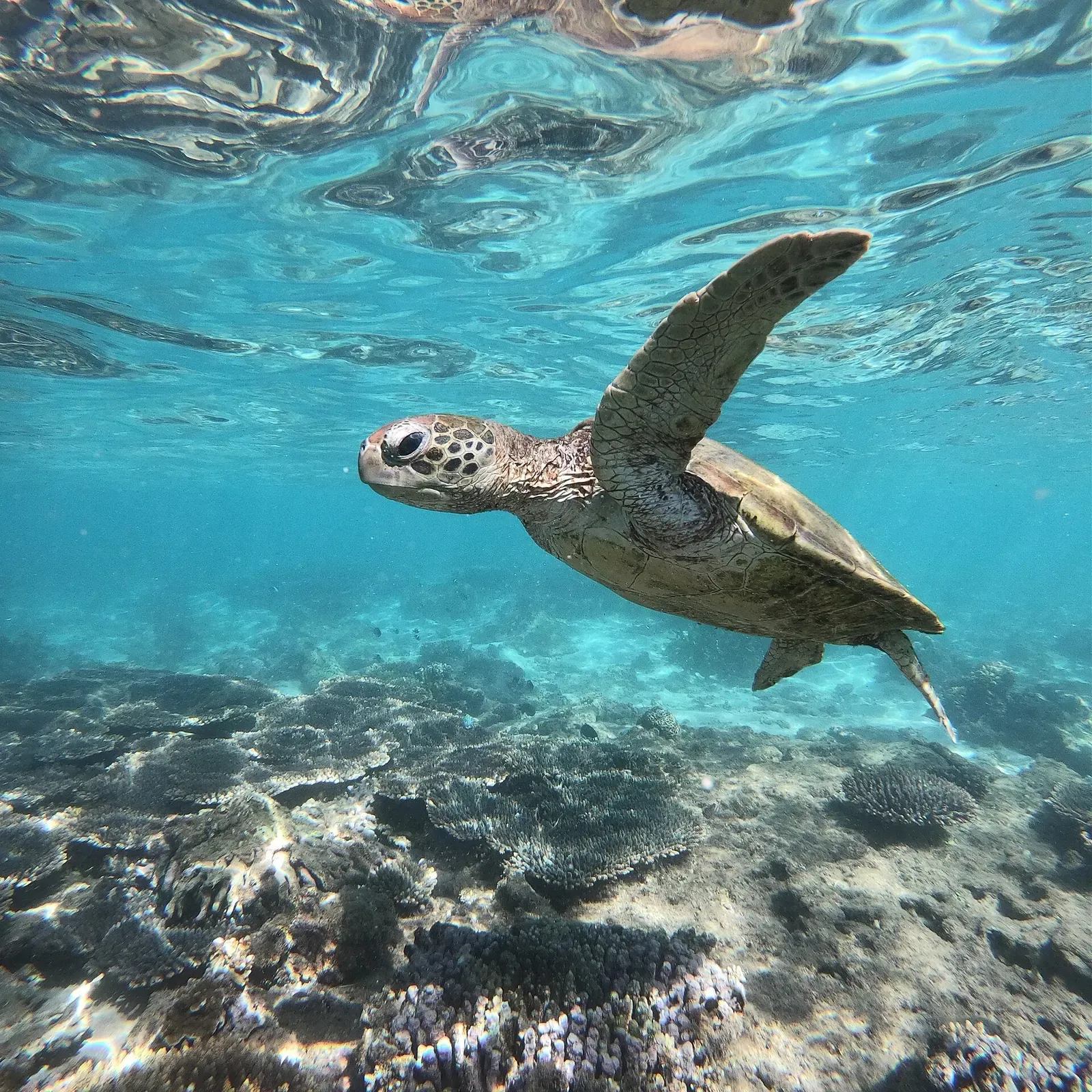
Whale sharks are the draw from mid-March into July, humpbacks pass close to the reef from July into October, and manta rays work the cleaning stations year-round. Turtles, reef sharks and eagle rays are everyday sightings, and dugongs graze the seagrass but come down to luck. April to September is the strongest overall stretch.
- Reef
- Drift
- Pelagic & blue water
- Whale sharks
- Manta rays
- Whales
- Reef sharks
- Sea turtles
- Eagle rays
- Dugongs & manatees
- Reef fish swarms
Best dive sites in Ningaloo Reef
Shore-entry reef with a spring nursery of young tiger sharks
Reef
Rocky ledges and cracks at 12-14 m inside a no-anchor sanctuary zone
Reef
Ledge swimthroughs to 18 m, with grey nurse sharks and mantas
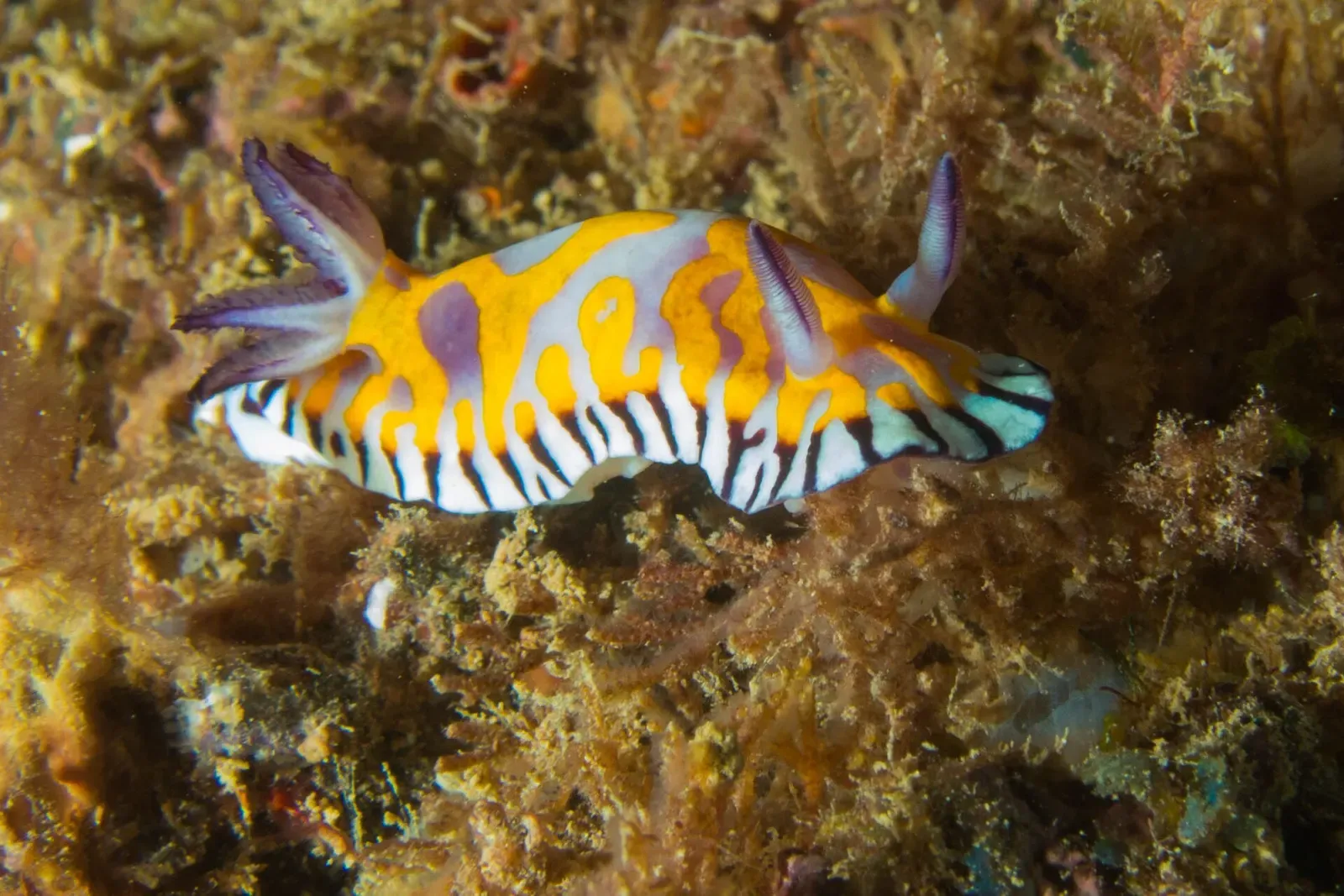
Wobbegongs, grey nurse and whitetips under a working navy jetty
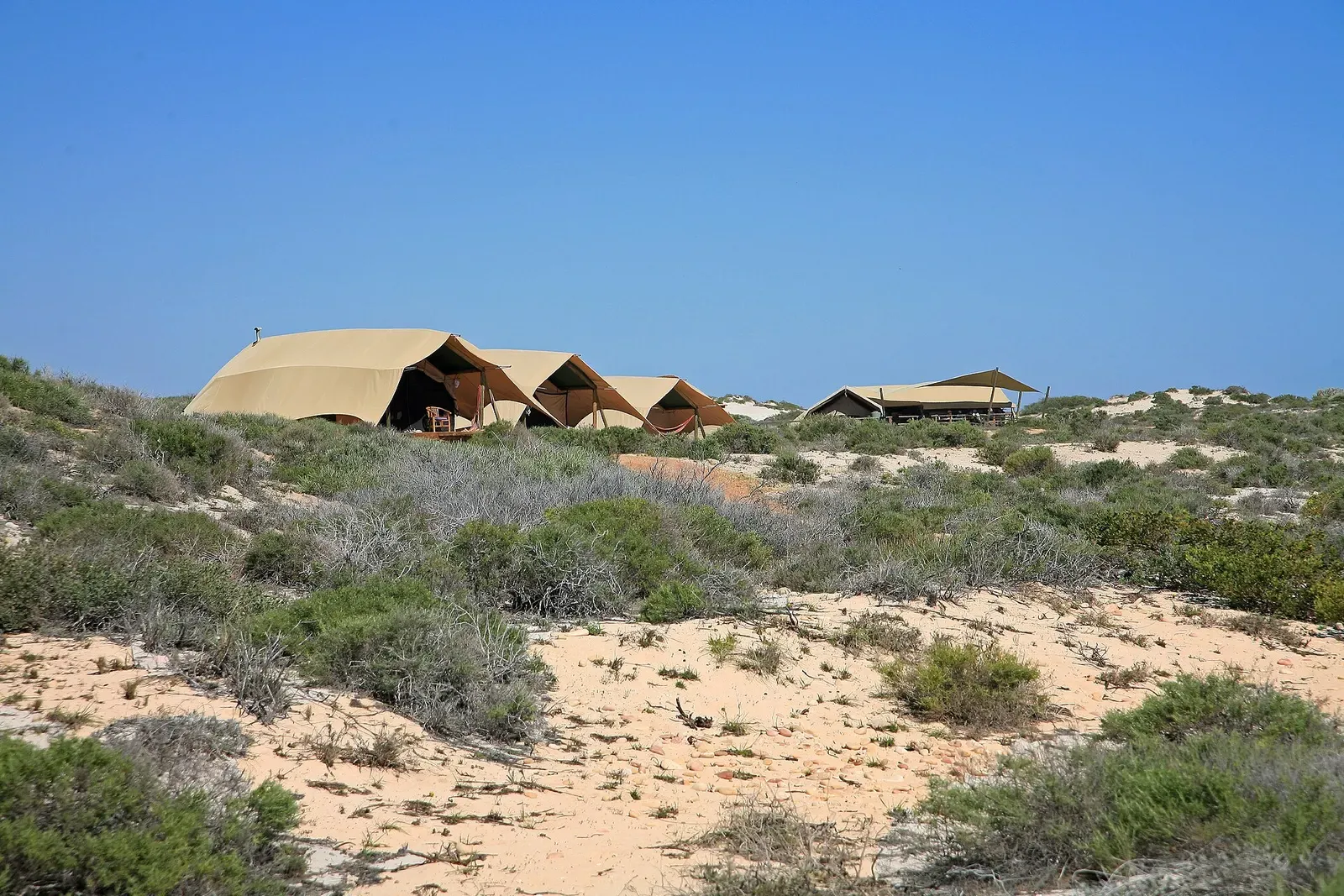
Shore-entry reef in 3 to 7 m with a campground on the dune behind
How to get to Ningaloo Reef
Flights from Perth land at Learmonth, about half an hour by road from Exmouth, which is the main base; Coral Bay, the other, is a longer drive south. Boats run daily in season from both. Whale shark and humpback swims are snorkel-only and licence-limited, so they are booked as separate day tours alongside the diving rather than as part of it.
Photos from Ningaloo Reef
Nicole McLachlan · CC BY-SA 4.0
Simonverhamme · CC BY-SA 4.0
Neil · CC BY 2.0
W. Bulach · CC BY-SA 4.0
Photo credits
- A whale shark glides past snorkelers in the clear waters off Ningaloo Reef. by Sylke Rohrlach, CC BY-SA 2.0, via Wikimedia Commons
- A green sea turtle swims just below the surface over Ningaloo Reef's shallow coral gardens. by Nicole McLachlan, CC BY-SA 4.0, via Wikimedia Commons
- A green sea turtle glides through the clear shallows of Ningaloo Reef near Coral Bay. by Simonverhamme, CC BY-SA 4.0, via Wikimedia Commons
- A blotched fantail ray rests on the reef bottom at Ningaloo Reef, trailed by reef fish. by Neil, CC BY 2.0, via Wikimedia Commons
- A sandy boardwalk leads to the turquoise shallows of Ningaloo Reef on Western Australia's coast. by W. Bulach, CC BY-SA 4.0, via Wikimedia Commons
Embed
Run a dive centre, club or blog? Embed this map of 8 dive sites near Ningaloo Reef on your own page.
In The Logbook
- Where to see reef sharks on your first divesBig animals · 14 min read
- Night diving: the best night dives in the worldNight diving · 12 min read
- Where can you legally swim with whales?Big animals · 14 min read
- Where to dive with manta rays, month by monthBig animals · 8 min read
- The best shore dives in the worldShore diving · 8 min read
Similar destinations

Wobbegongs stacked on the ledges of a permit-only naval pier
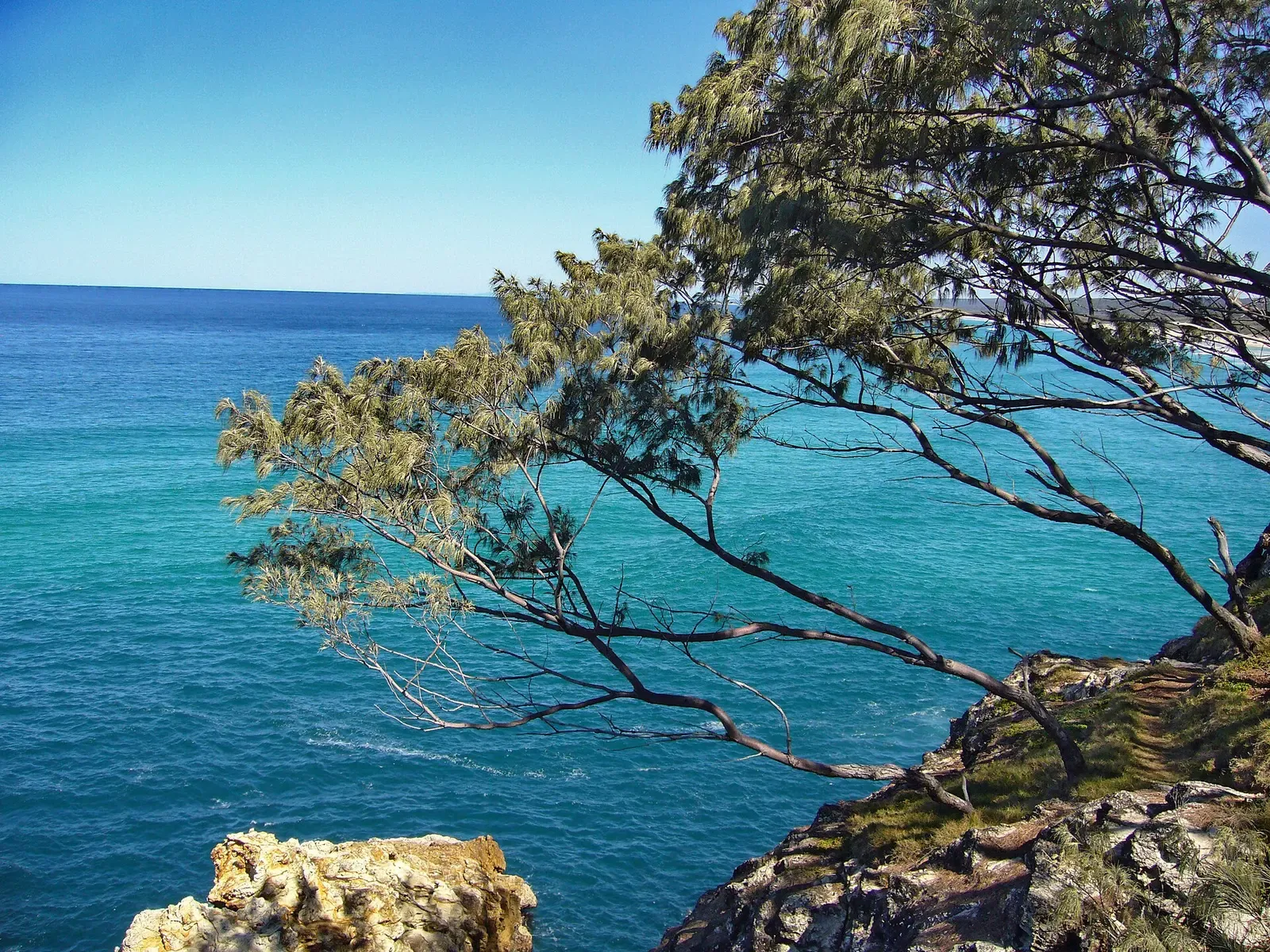
Manta cleaning stations Oct–Apr, grey nurse sharks through winter

Giant Queensland grouper at Cod Hole and dwarf minke whales in winter.

_(16222515872).jpg)


The highest reef manta density on the Great Barrier Reef, year-round