
Mediterranean · France
Port-Cros & Îles d'Hyères
Dozens of dusky groupers hold station on the rock face at La Gabinière
Photo: Waielbi · CC BY-SA 3.0
Port-Cros became France's first marine national park in 1963, and the dusky groupers off La Gabinière are the visible result — dozens of large fish holding station on a rock face where they were fished out a generation ago. The wider Îles d'Hyères group adds two of the Mediterranean's best-known deep wrecks, the cargo ship Le Donator and the steamer Le Grec, both sitting upright past 45 m with their structures intact and heavily colonised.
About diving in Port-Cros & Îles d'Hyères
Most days are two dives from a boat out of the mainland ports, with the choice of site made by the wind rather than by preference: the sheltered side of Port-Cros when the mistral blows, the exposed wreck ground outside the park when it does not. Park rules keep operators on designated moorings and limit numbers on the sites, so nothing is dropped onto the seagrass, and the condition of the reef reflects it.
La Gabinière is a small islet off Port-Cros whose rock face falls away in stepped ledges and boulder slopes, gorgonian-covered on the deeper sections and busy with fish from the surface down. Elsewhere in the group are headland dives such as Pointe du Vaisseau, gorgonian-hung from about 20 m, and submerged rocks such as Sec du Sarranier off Porquerolles, which rises to about 12 m and gathers shoals in the water above it. Visibility is honest rather than spectacular here, and it swings with the weather of the preceding days.
The wrecks are a separate proposition from the park diving. Le Donator, mined in 1945 off Porquerolles, and the steamer Le Grec both sit past 45 m, so they are short, cool, tightly planned dives with a decompression obligation and an eye on the clock, and local clubs will want to see a deep qualification before taking the booking. La Gabinière and the park reefs are comfortable Open Water ground. The area suits divers who want to see a reserve that visibly worked, and those building deep wreck experience with an easy fallback when the sea says no.
Best time to dive Port-Cros & Îles d'Hyères
| Jan | Feb | Mar | Apr | May | Jun | Jul | Aug | Sep | Oct | Nov | Dec | |
|---|---|---|---|---|---|---|---|---|---|---|---|---|
| Season | Fair | Fair | Fair | Good | Good | Prime | Prime | Prime | Prime | Good | Fair | Fair |
| Sea surface | 15°C59°F | 14°C57°F | 14°C57°F | 15°C59°F | 17°C63°F | 21°C70°F | 24°C75°F | 25°C77°F | 23°C73°F | 21°C70°F | 18°C64°F | 16°C61°F |
| Daytime high | 15°C59°F | 16°C61°F | 17°C63°F | 20°C68°F | 23°C73°F | 29°C84°F | 30°C86°F | 31°C88°F | 28°C82°F | 24°C75°F | 20°C68°F | 16°C61°F |
| Rain | 46 mm1.8 in | 48 mm1.9 in | 59 mm2.3 in | 44 mm1.7 in | 39 mm1.5 in | 21 mm0.8 in | 11 mm0.4 in | 15 mm0.6 in | 38 mm1.5 in | 83 mm3.3 in | 106 mm4.2 in | 58 mm2.3 in |
| Jan | Feb | Mar | Apr | May | Jun |
|---|---|---|---|---|---|
| Fair | Fair | Fair | Good | Good | Prime |
| Sea surface | |||||
| 15°C59°F | 14°C57°F | 14°C57°F | 15°C59°F | 17°C63°F | 21°C70°F |
| Daytime high | |||||
| 15°C59°F | 16°C61°F | 17°C63°F | 20°C68°F | 23°C73°F | 29°C84°F |
| Rain | |||||
| 46 mm1.8 in | 48 mm1.9 in | 59 mm2.3 in | 44 mm1.7 in | 39 mm1.5 in | 21 mm0.8 in |
| Jul | Aug | Sep | Oct | Nov | Dec |
|---|---|---|---|---|---|
| Prime | Prime | Prime | Good | Fair | Fair |
| Sea surface | |||||
| 24°C75°F | 25°C77°F | 23°C73°F | 21°C70°F | 18°C64°F | 16°C61°F |
| Daytime high | |||||
| 30°C86°F | 31°C88°F | 28°C82°F | 24°C75°F | 20°C68°F | 16°C61°F |
| Rain | |||||
| 11 mm0.4 in | 15 mm0.6 in | 38 mm1.5 in | 83 mm3.3 in | 106 mm4.2 in | 58 mm2.3 in |
2011–2025 averages. Sea surface: NOAA Coral Reef Watch, measured at the surface, so deeper water can run colder. Daytime high and rain: NASA POWER.
Jun–Sep is the main season with the warmest water; mistral winds close the exposed wreck sites in any month.
Best months: June, July, August, September
Port-Cros water temperature and weather by month
The sea surface runs from 14 °C (57 °F) in February to 25 °C (77 °F) in August. It is 24 °C (75 °F) or warmer from July and August. Most rain falls from October to December, peaking at about 110 mm (4.3 in) in November; June to August are the driest. Daytime highs reach 31 °C (88 °F) in August and drop to 15 °C (59 °F) in January. The coldest water here is about 13 °C (55 °F), so pack a 7 mm suit with a hood, or a semi-dry.
Dive types & marine life
The dusky groupers hold station on La Gabinière's wall through the season and are least shy in the prime months of June to September, when barracuda and reef-fish shoals are also at their densest. Nudibranchs and other macro life on the gorgonian slopes and the deep wrecks stay workable through the fair winter months, between mistral spells.
- Reef
- Wall
- Wreck
- Cave & cavern
- Groupers
- Barracuda
- Octopus & cuttlefish
- Nudibranchs
- Reef fish swarms
- Macro critters
Best dive sites in Port-Cros & Îles d'Hyères
Barracuda shoal at 15–25 m on a wall dropping to 50 m
Ridges to 40 m on the sheltered side of the islet
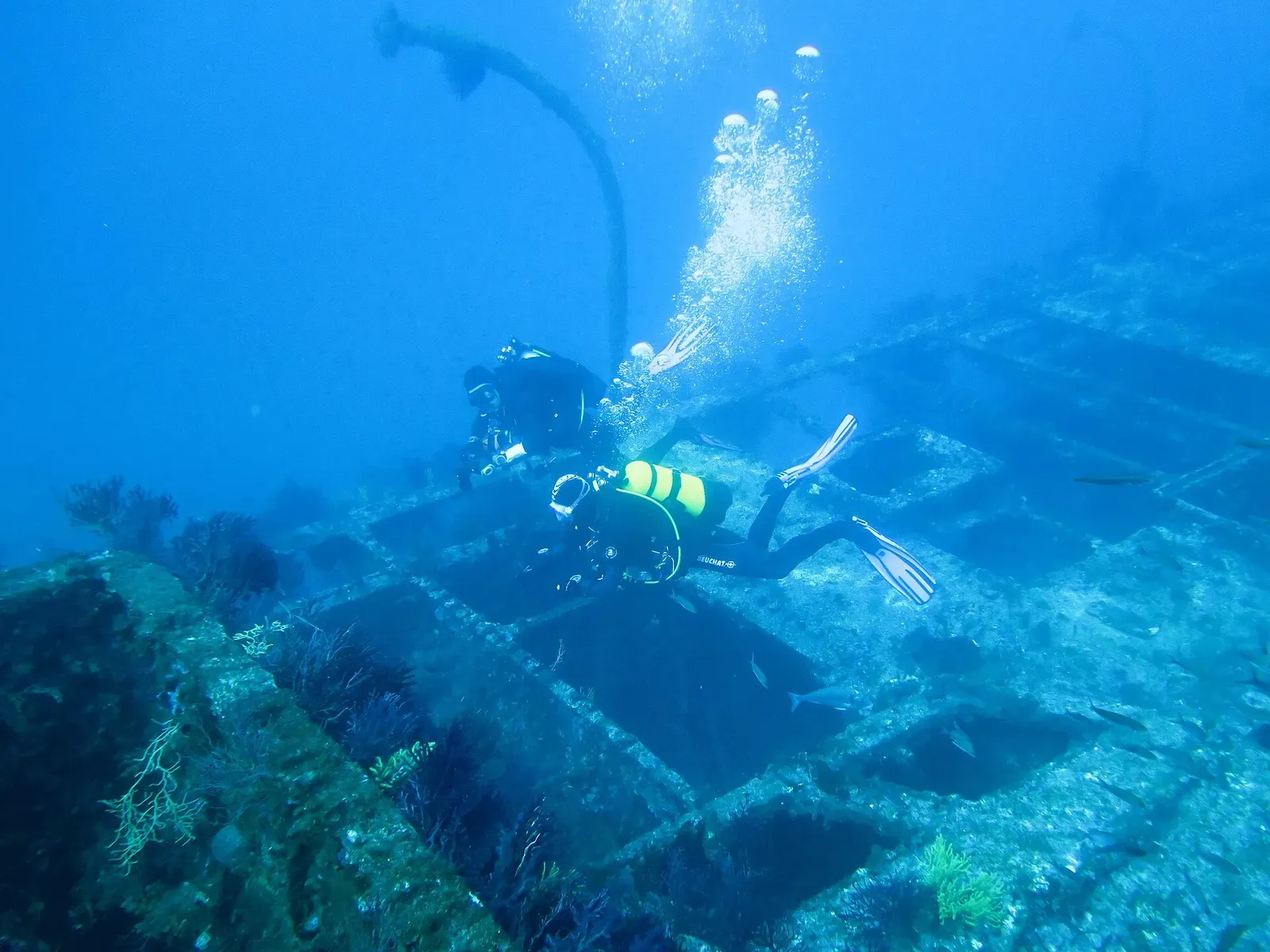
Wheel, propeller and rudder still in place between 35 and 51 m
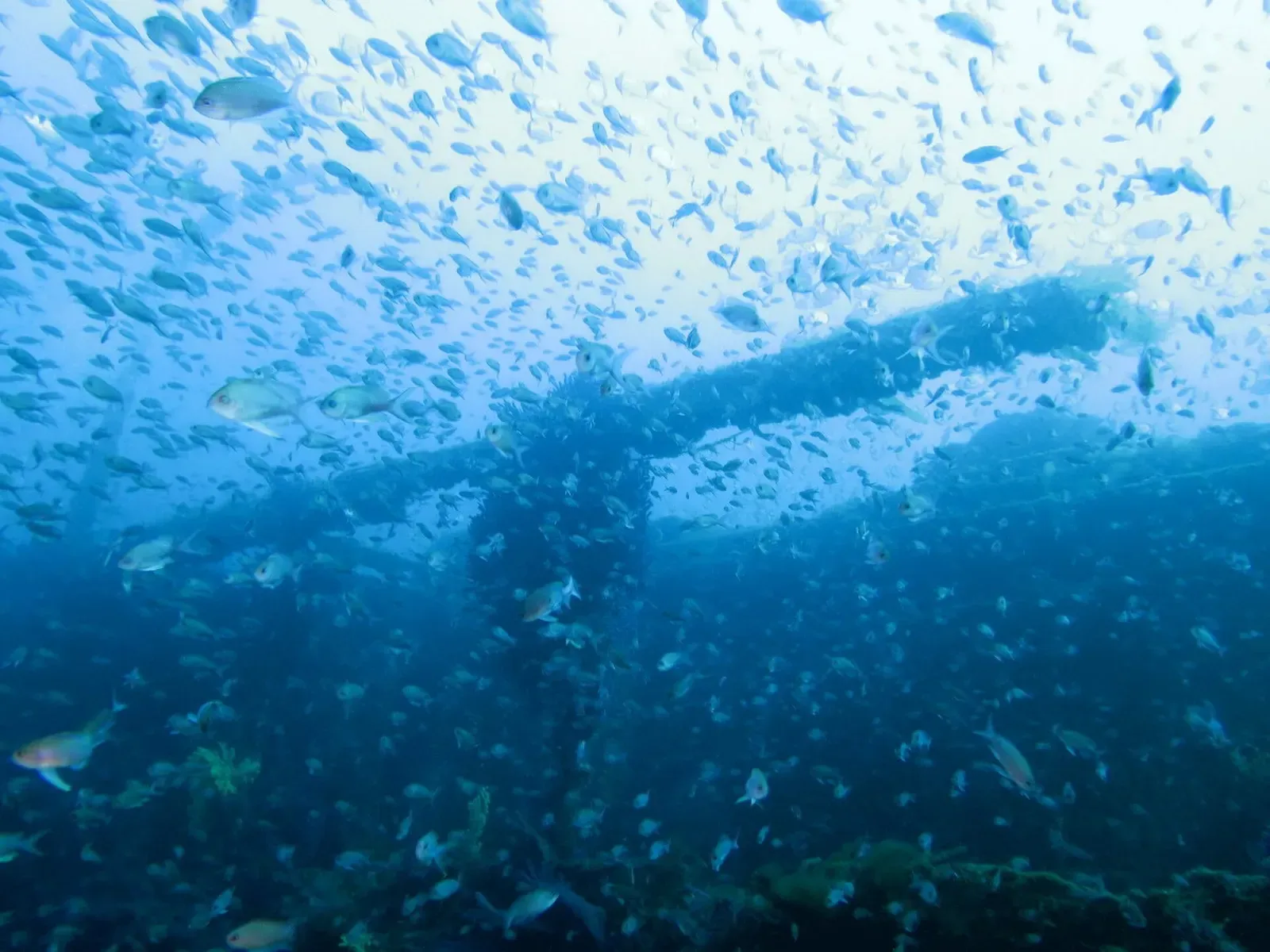
Named for the Greek crew and papers she carried when she sank
Sand slope
A 45-degree sand slope divers call the ski slope
Pinnacle
Gorgonian drop-off from an 18 m rock head to 40 m
La Gabinière
Islet off Port-Cros whose wall holds the park's grouper population.
Pointe du Vaisseau
Port-Cros headland with boulder slopes and gorgonians from 20 m.
How to get to Port-Cros & Îles d'Hyères
Toulon-Hyères is the closest airport, with the TGV to Toulon a straightforward alternative. Centres base themselves in Hyères, Le Lavandou and La Londe; passenger ferries run from La Tour Fondue to Porquerolles and from Le Lavandou and Hyères to Port-Cros. All diving is from boats.
Photos from Port-Cros & Îles d'Hyères
Waielbi · CC BY-SA 3.0
Waielbi · CC BY-SA 3.0
PHolzwarth · CC BY-SA 4.0
Matthieu Sontag (Mirgolth) · CC BY-SA 3.0
Dive videos
Plongée à la Gabinière, le sanctuaire à Mérou · CSV Diving team on YouTube
Plongée à Port Cros (Gabinière, épave Le Donator...) · Jerome Cance on YouTube
Photo credits
- School of yellowmouth barracuda over the rocky reef at La Gabiniere, Port-Cros by Waielbi, CC BY-SA 3.0, via Wikimedia Commons
- A dusky grouper approaches a scuba diver head-on at La Gabiniere by Waielbi, CC BY-SA 3.0, via Wikimedia Commons
- Two brown meagre swim over algae-covered rocks in the Gabiniere reserve by Waielbi, CC BY-SA 3.0, via Wikimedia Commons
- Orange discodoris sea slug on coarse sand at Plage de la Palud, Port-Cros by PHolzwarth, CC BY-SA 4.0, via Wikimedia Commons
- Neptune's lace bryozoan among pink coralline growth on a Port-Cros rock face by Matthieu Sontag (Mirgolth), CC BY-SA 3.0, via Wikimedia Commons
Embed
Run a dive centre, club or blog? Embed this map of 6 dive sites near Port-Cros on your own page.
In The Logbook
- Deep wreck diving: where recreational stopsWrecks · 8 min read
- How a dive computer calculates no-stop timeBody & health · 10 min read
- Air, nitrox or trimix: which gas, and when?Gear & kit · 15 min read
- WWII wrecks you can dive, by theatreWrecks · 7 min read
Similar destinations

Granite seamounts rising to the surface off Sardinia's south-east corner
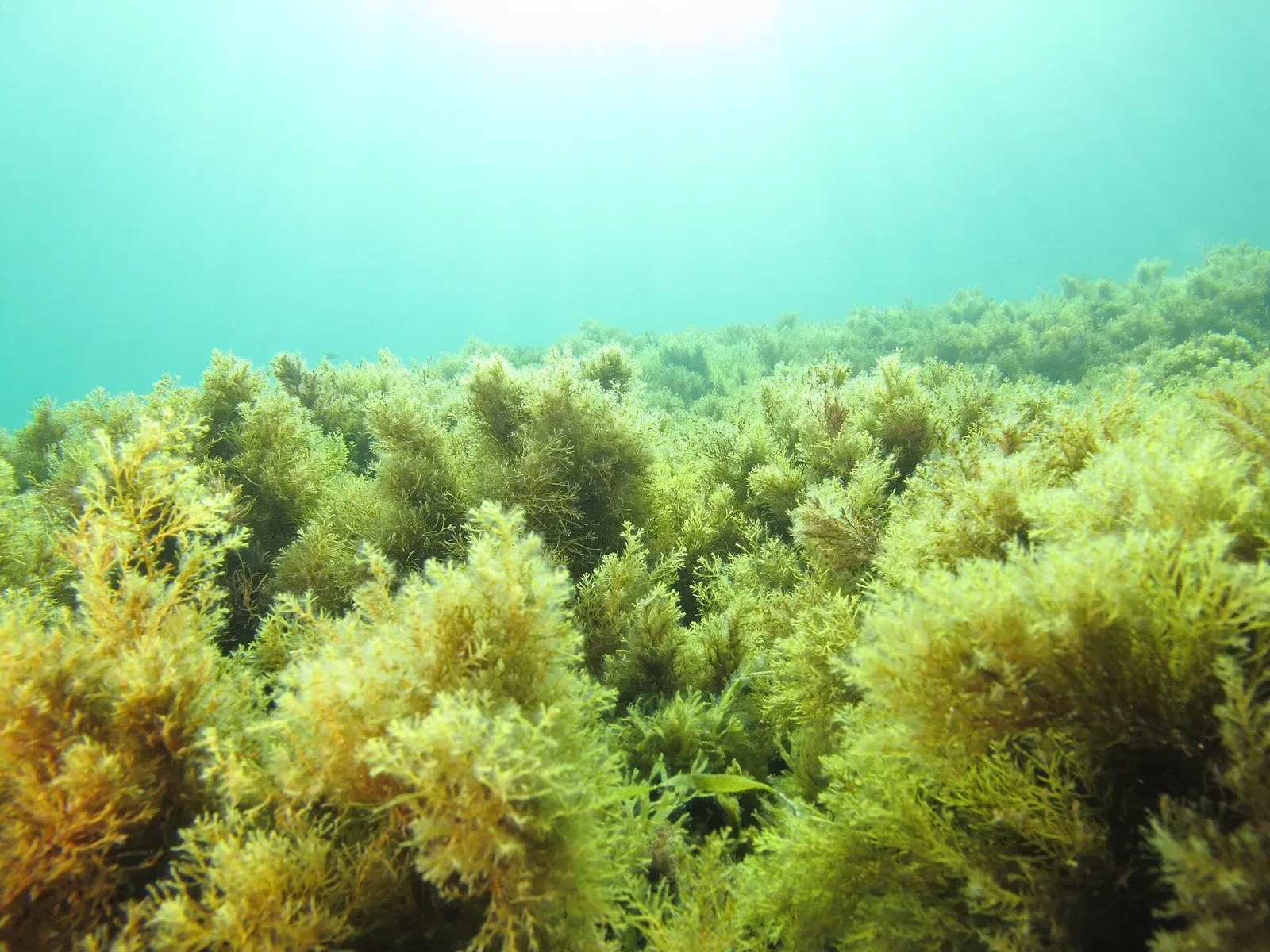
A B-17 bomber upright on the sand at 25 m below the citadel

Fossil elephant tusks inside a cave whose entrance is now at 10 m


Wrecks, deep walls and island dives inside a national park