Mediterranean · Spain
Costa Brava — Sant Feliu de Guíxols
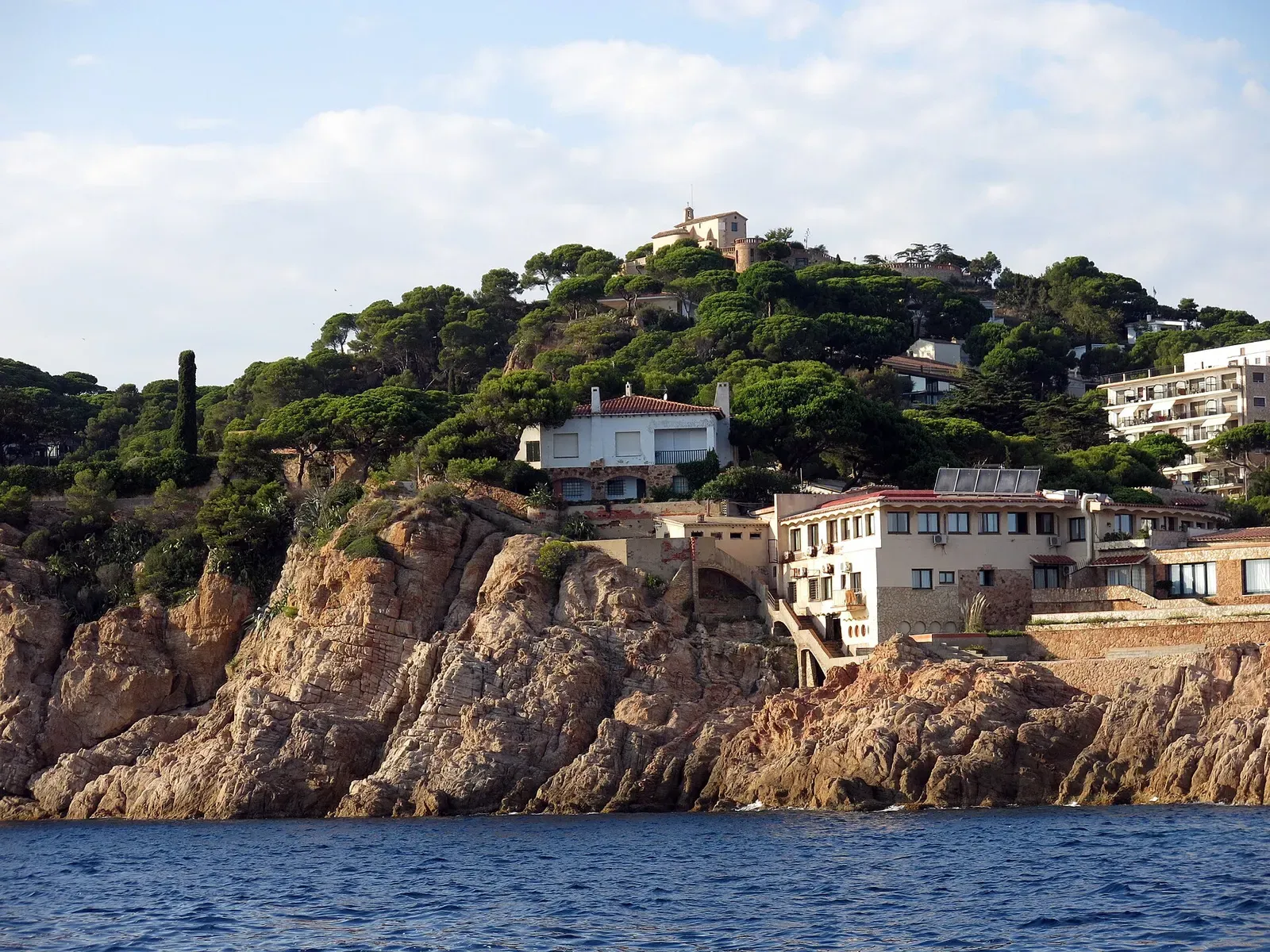
A cave system below the Eden Roc hotel, entered at 25 m from the beach or by boat
Photo: Enric · CC BY-SA 3.0
Sant Feliu de Guíxols is a port town on the middle Costa Brava with four dive centres between it and Platja d'Aro, and the diving is its own coast: a cave system below the Eden Roc hotel at Port Salvi, reached from the beach or by boat, and a run of offshore rock from La Llosa opposite the port (5–24 m) to Les Balelles, Planetes and the sheltered training cove at Secaïns. Ordinary dives sit between 5 and 30 m, and two of the centres say they dive all year. Montilivi at 20–34 m, where sunfish and tuna are reported, is the deep exception.
About diving in Costa Brava — Sant Feliu de Guíxols
Four centres work this coast. Sublimits is on Carrer Cristòfol Colom in Sant Feliu and sells boat dives at €45; Varadero Dive sits on the beachfront at Plaça Pau Casals and runs shore and boat dives into the Port Salvi tunnels and caves, with thirty years' experience by its own account; Piscis Diving has been resident at the Club Nàutic since 1999; and Dossotaigua dives the same sites from Platja d'Aro in an 11-seat boat. Most dives are short boat runs, but the Port Salvi caves can be entered from the beach, though the catalogue calls that access difficult and recommends the boat, and La Llosa de Platja d'Aro is two minutes out of Port d'Aro. Two of the centres state that they dive all year.
The caves are the reason to come. A canyon at 20 m leads to the entrance below the Eden Roc hotel; divers go in on the north side at 25 m and out to the south at 20 m. Moray eels are the most logged animal there by a wide margin, then octopus, barracuda, scorpionfish and grouper, with lobsters when the water is cold. The rest is rock: La Red is a wall from 15 to 30 m, Planetes is five rocky spurs at 10–25 m, La Llosa opposite the port spans 5–24 m and Les Balelles drop to 22 m. Secaïns, inside a protected cove, holds plenty of small life and nudibranchs in particular, with barracuda passing often; the gap between its inner rocks and the shore is only 3 m deep, so boats are a hazard there.
It suits divers staying in Sant Feliu or Platja d'Aro who want a proper cave dive without a long transfer, and beginners are well served: Piscis trains at Les Sofreres because it is shallow and sheltered from wind and boats, and La Llosa de Platja d'Aro is listed for beginners and photographers. The caves are rated CMAS two-star or Advanced Open Water, and the two deep sites are Montilivi at 20–34 m, where Nitrox is recommended, and El Jardín y la Red at 26–35 m. No marine reserve, permit or diving fee is recorded for this coast. Divers who want reserve-grade fish should carry on north to the Medes Islands off L'Estartit; jellyfish stings are a summer hazard along the whole Costa Brava.
When to dive Costa Brava — Sant Feliu de Guíxols
| Jan | Feb | Mar | Apr | May | Jun | Jul | Aug | Sep | Oct | Nov | Dec |
|---|---|---|---|---|---|---|---|---|---|---|---|
| Fair | Fair | Fair | Fair | Good | Prime | Prime | Prime | Prime | Good | Fair | Fair |
Centres in Sant Feliu and Platja d'Aro dive all year; logged sightings peak July to September and the water sits at 13 °C from January to March.
Dive types & marine life
Moray eels are the most logged animal at the Port Salvi caves, with sightings peaking in August, followed by octopus, barracuda, scorpionfish and grouper, and lobsters show when the water is cold. Secaïns holds small life and nudibranchs, with barracuda passing often. Sunfish and tuna are reported at Montilivi from 20 m down, and stingrays and eagle rays at La Llosa de Platja d'Aro.
- Cave & cavern
- Wall
- Reef
- Night
- Groupers
- Barracuda
- Octopus & cuttlefish
- Nudibranchs
- Macro critters
- Eagle rays
- Stingrays
Notable dive sites in Costa Brava — Sant Feliu de Guíxols
Cave & cavern
A cave below the Eden Roc hotel, wide enough to swim through
Deep rock at 26–35 m rising to a garden at 8 m
A rock off the town's port, 5 m down to 24 m
Wall
A holed and cracked wall from 15 m to 30 m
Reef
Twin islets that stand 2 m proud and drop to 22 m
Pelagic & blue water
Sunfish and tuna on a pelagic passage at 20–34 m
Reef
Five rocky spurs and the corridors between them
Reef
A protected cove at 5–20 m with passages to swim
La Llosa de Platja d'Aro
Reef two minutes by boat from Port d'Aro with stingrays and eagle rays; suits photographers and beginners.
Getting there
Girona-Costa Brava airport is about 40 km away and Barcelona El Prat about 125 km. There is no railway; SARFA runs the regional bus, and by road the AP-7 and the C-65 through Llagostera lead in from Girona, or the coastal GI-682 from Blanes and Lloret. Centres are on Carrer Cristòfol Colom, on the beachfront at Plaça Pau Casals, at the Club Nàutic and in Platja d'Aro.
Photos from Costa Brava — Sant Feliu de Guíxols
Jopparn · CC BY-SA 4.0
Enric · CC BY-SA 4.0
Jopparn · CC BY-SA 4.0
Photo credits
- Rocky headland at Port Salvi with the Sant Elm hermitage and pine woods above the water by Enric, CC BY-SA 3.0, via Wikimedia Commons
- Wooded cliffs enclosing a turquoise cove, seen from the Mirador de les Modistes viewpoint by Jopparn, CC BY-SA 4.0, via Wikimedia Commons
- Headland of Sant Elm and Punta de Garbí with hillside houses, seen from the sea by Enric, CC BY-SA 4.0, via Wikimedia Commons
- A small boat moored in the bay below the Mirador de les Modistes, wooded hills on the far shore by Jopparn, CC BY-SA 4.0, via Wikimedia Commons
Similar destinations
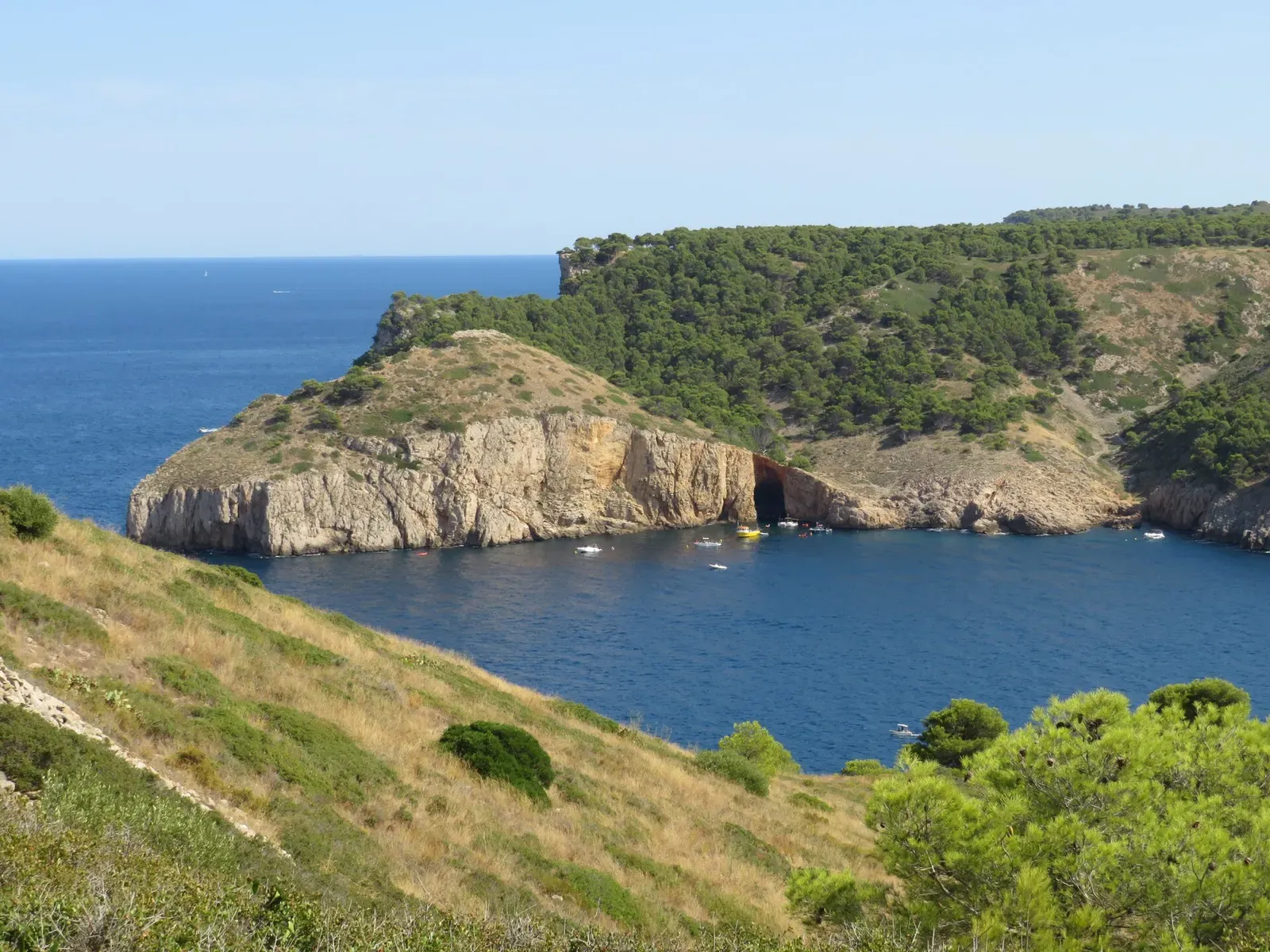
Tunnels, walls and a shallow wreck under the Montgrí cliffs, dived from L'Escala
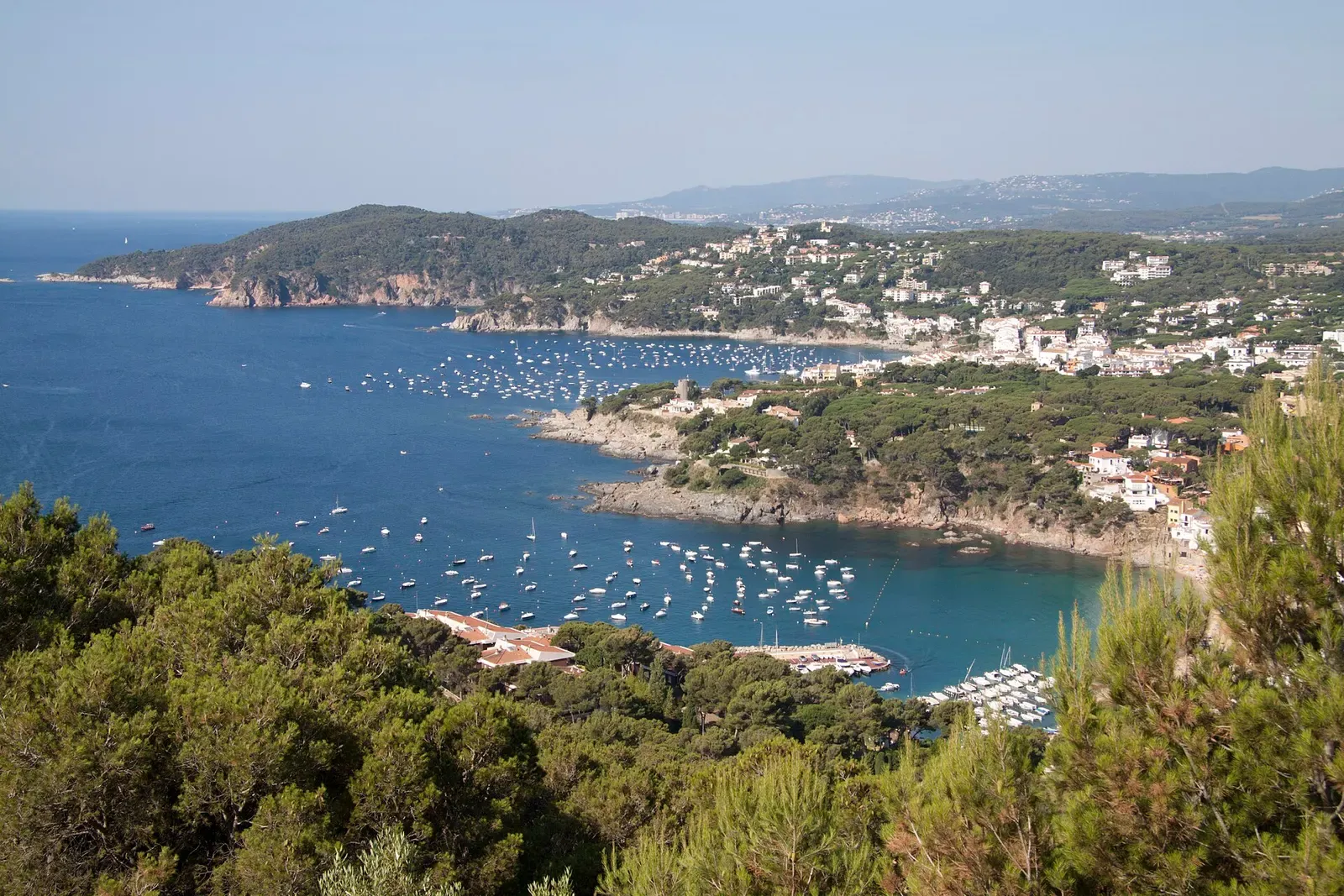
Three seamounts, a navy-tug wreck and gorgonian walls between Palamós and Cap de Begur

Dusky grouper by the dozen inside a Costa Brava marine reserve
,_amb_l%27ermita_de_Sant_Elm_al_fons.JPG)

.JPG)

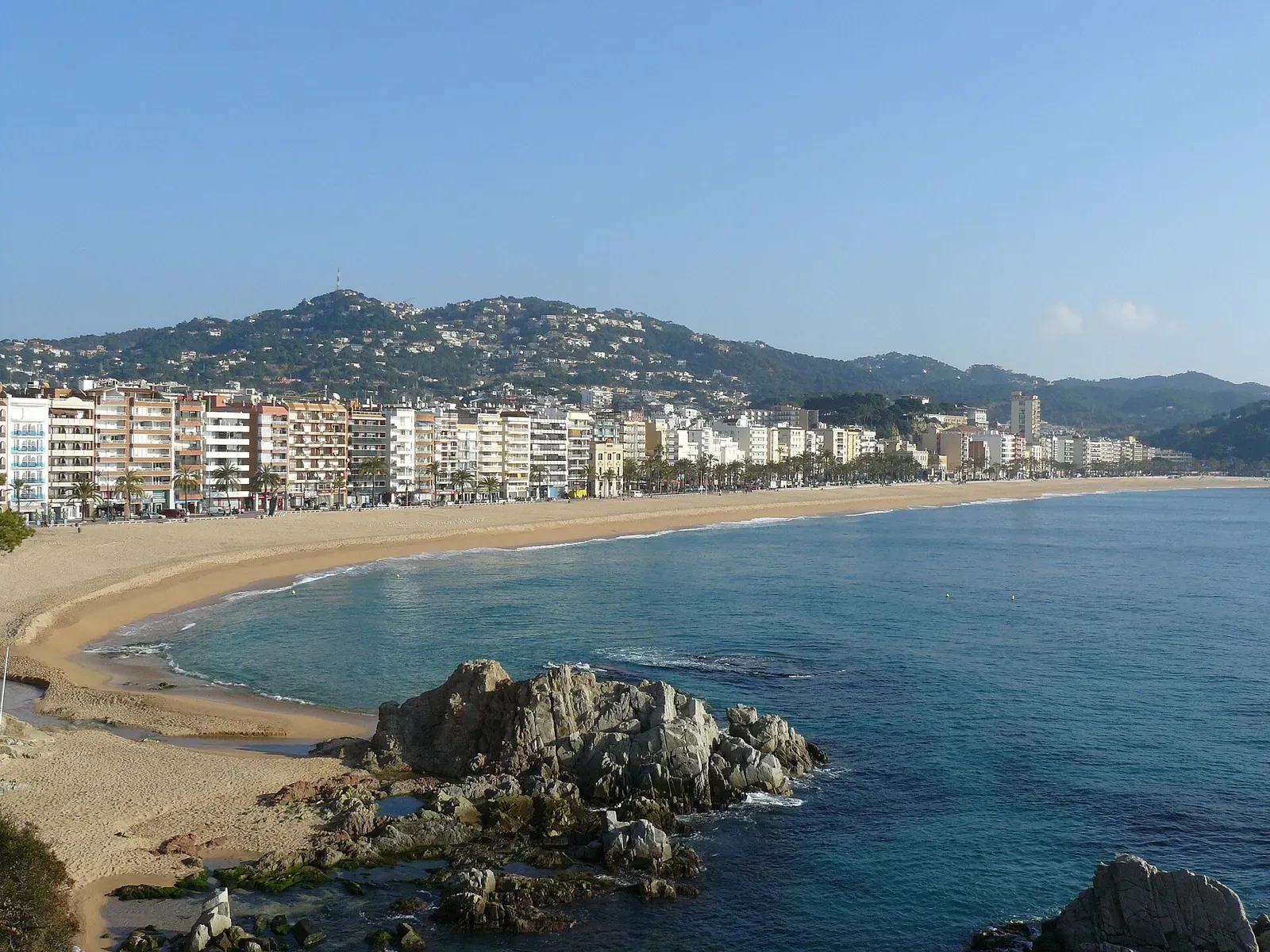
Town-based Costa Brava diving over granite rock and Posidonia