
Atlantic · Spain
Lanzarote & Museo Atlántico
Three hundred concrete figures stand at 14 m in Europe's underwater museum
Photo: Julien Renoult · CC BY 4.0
Lanzarote's volcanic coast gives black-sand slopes, lava arches and a wall at Playa Chica that starts in 8 m and falls past 40 m, all reachable from shore. Off Playa Blanca sits the Museo Atlántico, Europe's first underwater sculpture museum: some three hundred concrete figures placed at 12 to 14 m in 2016 and now colonised by algae and sponges. The island is one of the last strongholds of the critically endangered angel shark, which rests on the sand through winter.
About diving in Lanzarote & Museo Atlántico
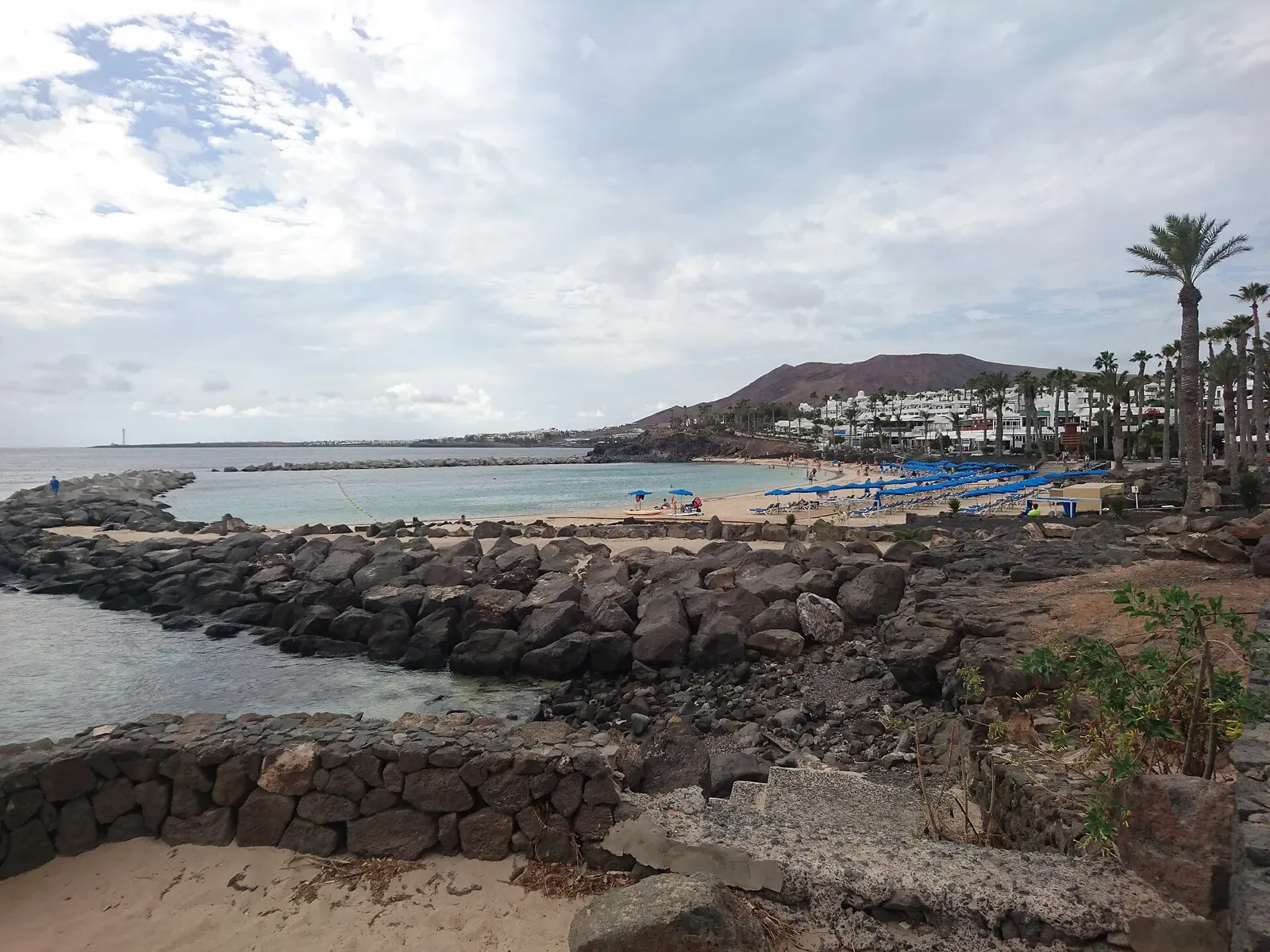
Two bases on the south coast carry most of the diving. Centres in Puerto del Carmen work out of Playa Chica, a cove where divers kit up on the promenade, walk down to the sand and are over rock within a minute or two, which makes three tanks in a day realistic and keeps costs down. The Museo Atlántico is a separate outing: a short boat run from Marina Rubicón in Playa Blanca, a descent line onto the sand, and access only through authorised centres on a ticket, so it is booked on its own rather than slotted into a shore day.
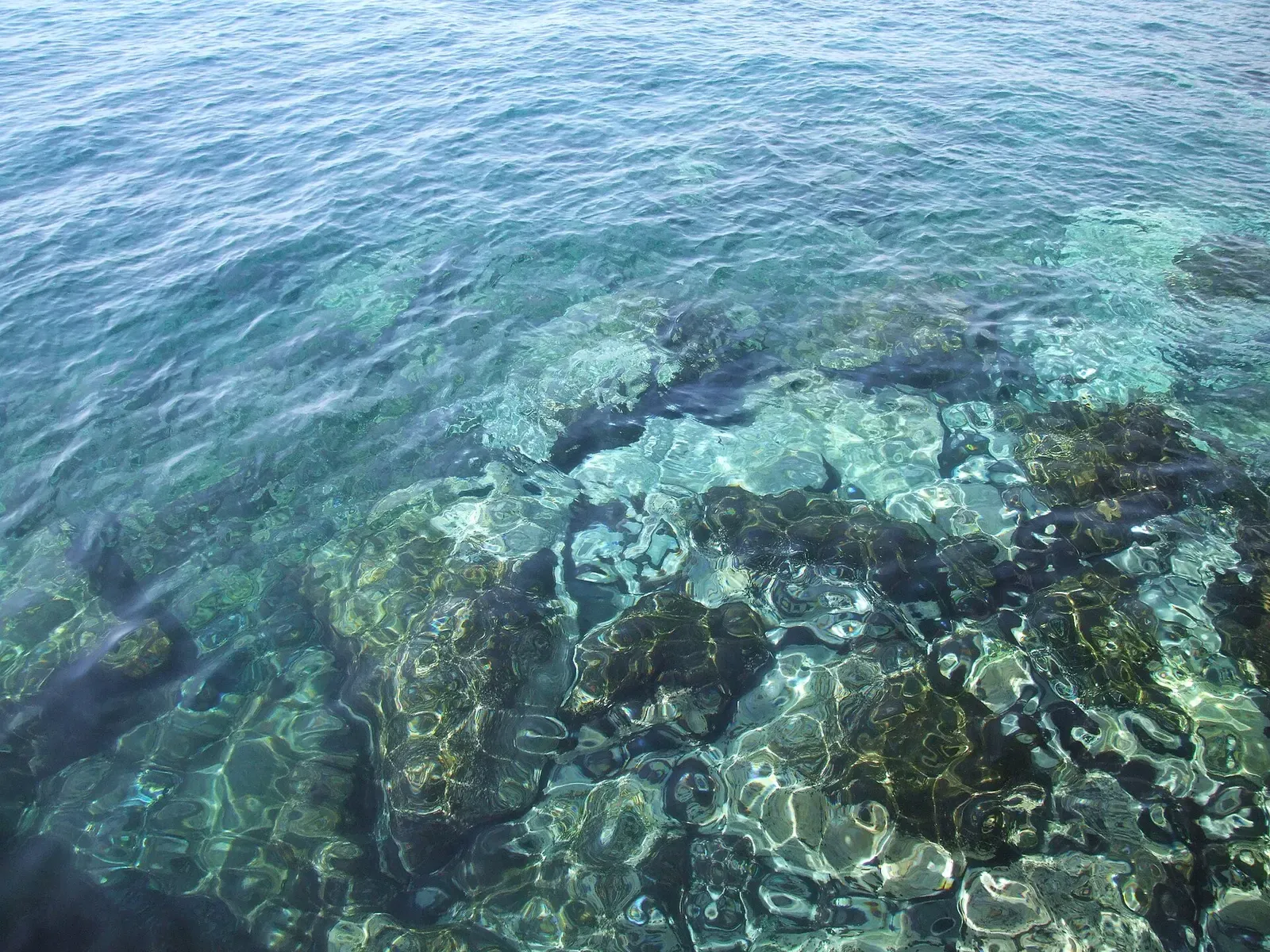
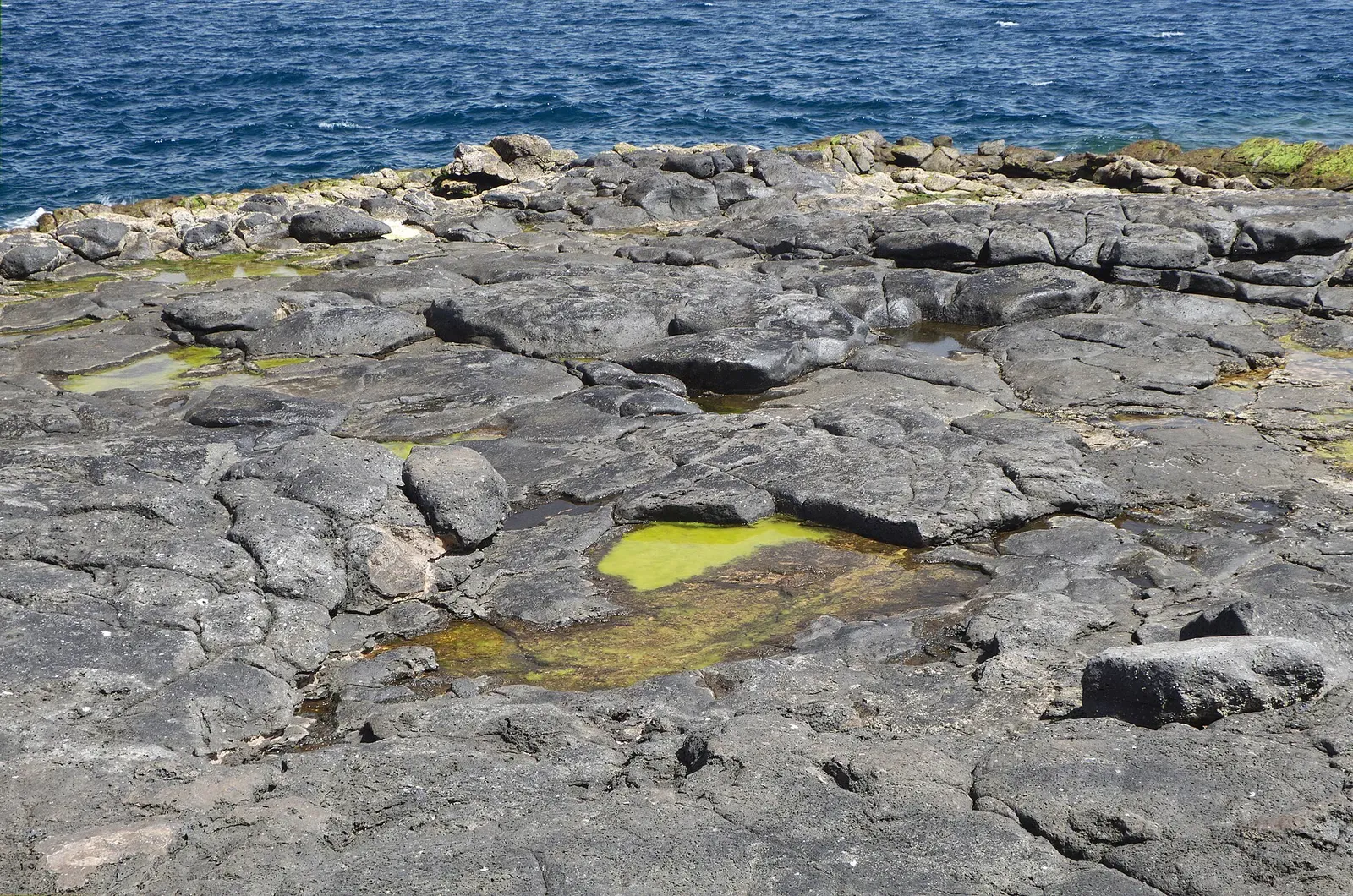
The rock is young basalt and it behaves nothing like limestone or coral. Instead of a continuous reef there are ridges and spurs running seaward onto black sand, lava tubes that take you in one mouth and out another, and boulder piles with dark overhangs beneath them. Sand and rock alternate the whole way along, and the grains are coarse volcanic grit rather than fine silt, so they drop back down quickly when a fin catches them.
The museum reads as a set of separate installations spread across a flat sand floor rather than one continuous field, so it dives as a slow loop from group to group: figures walking toward a wall pierced by a single doorway, a crowded boat, a mass of bodies packed together on the seabed. It rewards a camera and a guide who knows the running order. Playa Chica is the opposite proposition, one entry with a fan of routes off it, from a shallow sand bowl used for training to tube and cavern lines that want a torch and some experience.
It suits divers after volume rather than one set-piece. A week can be filled without repeating much, and photographers do well on the black sand, where small subjects sit against a plain dark background instead of a busy reef. It also holds up outside summer: no month drops off the calendar here, and the quieter shoulder weeks trade a couple of degrees of warmth for far fewer divers in the water.
Best time to dive Lanzarote & Museo Atlántico
| Jan | Feb | Mar | Apr | May | Jun | Jul | Aug | Sep | Oct | Nov | Dec | |
|---|---|---|---|---|---|---|---|---|---|---|---|---|
| Season | Good | Good | Good | Good | Good | Prime | Prime | Prime | Prime | Prime | Good | Good |
| Sea surface | 19°C66°F | 18°C64°F | 18°C64°F | 19°C66°F | 20°C68°F | 21°C70°F | 22°C72°F | 23°C73°F | 23°C73°F | 23°C73°F | 22°C72°F | 20°C68°F |
| Daytime high | 22°C72°F | 21°C70°F | 22°C72°F | 23°C73°F | 23°C73°F | 24°C75°F | 25°C77°F | 26°C79°F | 26°C79°F | 27°C81°F | 25°C77°F | 23°C73°F |
| Rain | 19 mm0.7 in | 13 mm0.5 in | 10 mm0.4 in | 4 mm0.2 in | 11 mm0.4 in | 12 mm0.5 in | 1 mm0.0 in | 2 mm0.1 in | 7 mm0.3 in | 13 mm0.5 in | 17 mm0.7 in | 11 mm0.4 in |
| Jan | Feb | Mar | Apr | May | Jun |
|---|---|---|---|---|---|
| Good | Good | Good | Good | Good | Prime |
| Sea surface | |||||
| 19°C66°F | 18°C64°F | 18°C64°F | 19°C66°F | 20°C68°F | 21°C70°F |
| Daytime high | |||||
| 22°C72°F | 21°C70°F | 22°C72°F | 23°C73°F | 23°C73°F | 24°C75°F |
| Rain | |||||
| 19 mm0.7 in | 13 mm0.5 in | 10 mm0.4 in | 4 mm0.2 in | 11 mm0.4 in | 12 mm0.5 in |
| Jul | Aug | Sep | Oct | Nov | Dec |
|---|---|---|---|---|---|
| Prime | Prime | Prime | Prime | Good | Good |
| Sea surface | |||||
| 22°C72°F | 23°C73°F | 23°C73°F | 23°C73°F | 22°C72°F | 20°C68°F |
| Daytime high | |||||
| 25°C77°F | 26°C79°F | 26°C79°F | 27°C81°F | 25°C77°F | 23°C73°F |
| Rain | |||||
| 1 mm0.0 in | 2 mm0.1 in | 7 mm0.3 in | 13 mm0.5 in | 17 mm0.7 in | 11 mm0.4 in |
2011–2025 averages. Sea surface: NOAA Coral Reef Watch, measured at the surface, so deeper water can run colder. Daytime high and rain: NASA POWER.
Divable all year in 18–24°C water; Jun–Oct is warmest and calmest, and angel sharks are most reliably seen Nov–Mar.
Best months: June, July, August, September, October
Lanzarote water temperature and weather by month
The sea surface runs from 18 °C (64 °F) in March to 23 °C (73 °F) in September. Rain is scarce: about 120 mm (4.7 in) falls in a typical year. Daytime highs reach 27 °C (81 °F) in October and drop to 21 °C (70 °F) in February. The coldest water here is about 18 °C (64 °F), so pack a 5 mm suit.
Dive types & marine life
Shoals of grunt and sardine hold over the rock all year, with octopus, cuttlefish and moray in the cracks and stingrays settled on the black sand. Barracuda work the deeper rock and turtle sightings are more likely through the warm June-to-October stretch. November to March is the window for angel sharks resting on sand, and nudibranchs are easier to pick out on shallow rock then too.
- Reef
- Wall
- Cave & cavern
- Muck & macro
- Night
- Stingrays
- Octopus & cuttlefish
- Barracuda
- Nudibranchs
- Macro critters
- Reef fish swarms
- Sea turtles
Best dive sites in Lanzarote & Museo Atlántico
Artificial reef
A dive that starts at a submerged boat and runs to 40 m
A short swim-through entered at 26 m, exiting at 18 m
Reef
Shore-entry reef at 7-8 m, the local beginner and refresher dive
Reef
Black coral forest and gorgonia between 40 and 85 m
Reef
Lava formations stepping from 12 m to a 45 m bottom
Cave & cavern
A cave full of narwhal shrimp on a wall with a 40 m foot
Artificial reef
Outfall pipes standing as the only structure on an open platform
Artificial reef
Europe's first underwater museum, opened in January 2017
Wall
A branch of orange coral inside a cave at the end of the wall
Wall
A wall behind the lighthouse dropping past 80 m
A drop-off starting at 15 to 18 metres, dived from the beach
Reef
A lava reef dived as a multilevel from 12 m down to 20 m
Cave & cavern
A cave on volcanic platforms above a 35 m drop
Reef
Six-metre lava formations with schooling barracuda, all inside 18 m
Drift
A short, easy drift to 12 m towards Flamingo Beach
The Cathedral
Large lava cavern at 35 m with a resident school of grunts.
How to get to Lanzarote & Museo Atlántico
Lanzarote's airport sits just outside Arrecife, a few minutes' drive from Puerto del Carmen, where most divers base for walk-in access to Playa Chica. Playa Blanca, at the southern tip, is the other option and the closer one for the museum boats. A hire car helps if you want both, though centres run transfers either way.
Photos from Lanzarote & Museo Atlántico
Julien Renoult · CC BY 4.0
Norbert Nagel · CC BY-SA 3.0
Dive videos
Scuba Diving Underwater Museum (Museo Atlántico), Lanzarote 2018 (Canary Islands) - GoPro HERO6 · TomPhillips on YouTube
Explore the Underwater Wonders of Playa Chica, Puerto Del Carmen! · Timothy's Travels on YouTube
Photo credits
- A critically endangered angelshark lies camouflaged on the sandy seabed off Lanzarote by Julien Renoult, CC BY 4.0, via Wikimedia Commons
- An angelshark glides just above the seabed, its flattened body blending into the sand off Lanzarote by Julien Renoult, CC BY 4.0, via Wikimedia Commons
- Waves surge into a lava sea arch below the red volcanic cone of Montaña Bermeja at Los Hervideros by Norbert Nagel, CC BY-SA 3.0, via Wikimedia Commons
Embed
Run a dive centre, club or blog? Embed this map of 12 dive sites near Lanzarote on your own page.
In The Logbook
- Wetsuit thickness by water temperatureGear & kit · 11 min read
- Cheapest places to scuba dive, and the catchTrip planning · 15 min read
- DPV diving: what an underwater scooter changesGear & kit · 10 min read
- The best shore dives in the worldShore diving · 8 min read
Similar destinations

Lava arches, canyons and tunnels reachable from a rocky beach entry
Atlantic
Tenerife
Spain
Black sand and lava arches metres from shore, with resident pilot whales

Around three hundred charted wrecks, most of them shallower than 20 m


A 1.5 km volcanic reef stepping from 7 m to past 40 m off Caleta de Fuste