Mediterranean · Croatia
Vis
Wartime bombers and a storm-sunk steamship around one Adriatic island
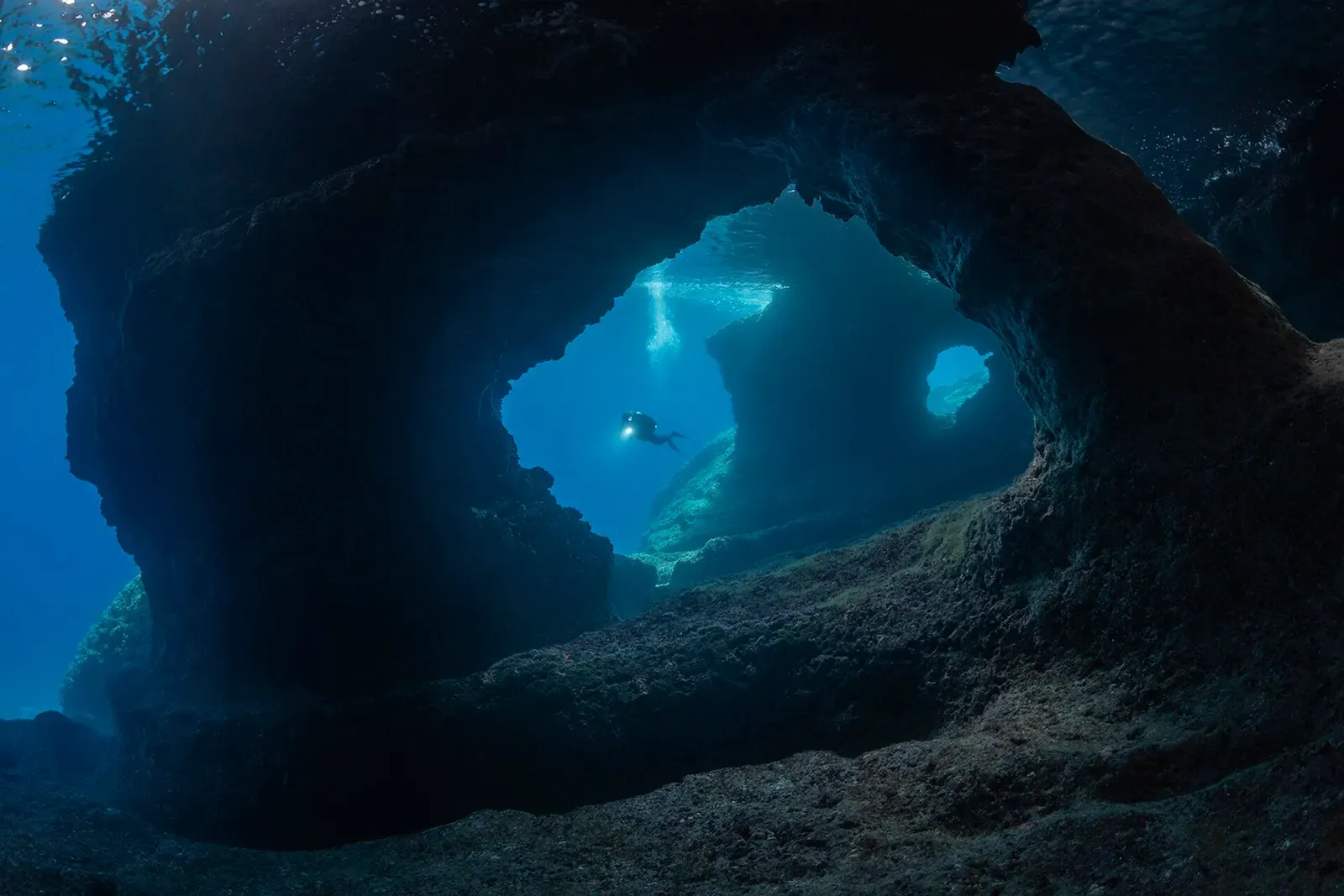
Photo: Borut Furlan · CC BY-SA 4.0
A Yugoslav naval base until 1989, Vis is one of the Adriatic’s main wreck-diving islands, with around twenty wrecks of ships, submarines and planes in its waters. The steamship Teti, lost in a storm in 1930, lies from about 10 m to 34 m off Komiža; a B-24 Liberator bomber rests at 38 to 40 m; and a B-17 Flying Fortress sits at 72 m for trimix divers. Between the wrecks, the karst coast gives walls, caverns and the Green Cave on Ravnik, lit green by sunlight. All diving goes through licensed centres.
About diving in Vis
Diving Vis is a boat operation out of the island’s two harbours, Vis town and Komiža, and the day is built around wrecks rather than reefs. Centres typically run one deeper dive on a hull followed by something shallower on rock or in a cavern. The whole island is protected for its cultural and historical heritage, and all diving must be organised through authorised centres, so independent diving is not an option and the plan is agreed before anyone gets in the water.
The seabed around the island is Adriatic karst: pale limestone dropping away in steps and vertical faces, undercut with caves and arches, with red gorgonians and soft white coral on the walls down to about 40 m. Sand and silt lie where the wrecks settled. The water is cooler than the southern Mediterranean, and even in summer a thermocline keeps the deeper water at 16 to 18 °C. The season is correspondingly short, running from May to October.
The wrecks carry the trip. The steamship Teti is the one dive everybody does, sitting against the islet of Mali Barjak from 10 m to 34 m. The B-24 Liberator, a 1944 bomber, lies at 38 to 40 m near the southern islets, at the edge of recreational limits. Beyond them lies a deep list for technical divers: the B-17 at 72 m, the Vassilios and Brioni, and the ironclads Re d’Italia and Palestro, lost at the Battle of Lissa in 1866 and now below 100 m. Two ancient shipwrecks off the islet of Host, at 12 to 25 m, are far shallower.
This is a destination for wreck divers who already have depth experience. Advanced Open Water plus a wreck course is a fair minimum for the aircraft, the deepest sites are technical, and good buoyancy matters around silty interiors. Divers after warm water, easy shore entries or heavy fish life will be better served elsewhere in the Mediterranean. For a gentler Croatian option, Primošten and Rogoznica on the mainland coast, between Šibenik and Trogir, offer walls and small wrecks from shore and day boat.
Best time to dive Vis
| Jan | Feb | Mar | Apr | May | Jun | Jul | Aug | Sep | Oct | Nov | Dec | |
|---|---|---|---|---|---|---|---|---|---|---|---|---|
| Season | Off-season | Off-season | Off-season | Fair | Good | Prime | Prime | Prime | Prime | Good | Off-season | Off-season |
| Sea surface | 15°C59°F | 14°C57°F | 14°C57°F | 15°C59°F | 18°C64°F | 23°C73°F | 25°C77°F | 26°C79°F | 24°C75°F | 21°C70°F | 19°C66°F | 17°C63°F |
| Daytime high | 15°C59°F | 15°C59°F | 17°C63°F | 19°C66°F | 23°C73°F | 28°C82°F | 30°C86°F | 30°C86°F | 27°C81°F | 23°C73°F | 20°C68°F | 17°C63°F |
| Rain | 76 mm3.0 in | 78 mm3.1 in | 73 mm2.9 in | 51 mm2.0 in | 55 mm2.2 in | 35 mm1.4 in | 31 mm1.2 in | 34 mm1.3 in | 83 mm3.3 in | 77 mm3.0 in | 125 mm4.9 in | 104 mm4.1 in |
| Jan | Feb | Mar | Apr | May | Jun |
|---|---|---|---|---|---|
| Off-season | Off-season | Off-season | Fair | Good | Prime |
| Sea surface | |||||
| 15°C59°F | 14°C57°F | 14°C57°F | 15°C59°F | 18°C64°F | 23°C73°F |
| Daytime high | |||||
| 15°C59°F | 15°C59°F | 17°C63°F | 19°C66°F | 23°C73°F | 28°C82°F |
| Rain | |||||
| 76 mm3.0 in | 78 mm3.1 in | 73 mm2.9 in | 51 mm2.0 in | 55 mm2.2 in | 35 mm1.4 in |
| Jul | Aug | Sep | Oct | Nov | Dec |
|---|---|---|---|---|---|
| Prime | Prime | Prime | Good | Off-season | Off-season |
| Sea surface | |||||
| 25°C77°F | 26°C79°F | 24°C75°F | 21°C70°F | 19°C66°F | 17°C63°F |
| Daytime high | |||||
| 30°C86°F | 30°C86°F | 27°C81°F | 23°C73°F | 20°C68°F | 17°C63°F |
| Rain | |||||
| 31 mm1.2 in | 34 mm1.3 in | 83 mm3.3 in | 77 mm3.0 in | 125 mm4.9 in | 104 mm4.1 in |
2011–2025 averages. Sea surface: NOAA Coral Reef Watch, measured at the surface, so deeper water can run colder. Daytime high and rain: NASA POWER.
June to September is prime: the surface reaches 22 to 25 °C in July and August, though it stays 16 to 18 °C below the summer thermocline, so a 5 mm wetsuit is the norm even then, and visibility is at its most reliable from late June into early October, once the spring algae bloom has cleared. May and October are good but cooler, and a 7 mm suit or a hood is the usual choice; visibility can fall to 10 to 20 m in spring and after autumn storms. April sits at the edge of the season. November to March is off: the diving season runs May to October, and the sea at Split, the nearest measured station, averages 12 to 14 °C from December to March.
Best months: June, July, August, September
Vis water temperature and weather by month
The sea surface runs from 14 °C (57 °F) in February to 26 °C (79 °F) in August. It is 24 °C (75 °F) or warmer from July to September. Most rain falls from September to March, peaking at about 130 mm (5.1 in) in November; June to August are the driest. Daytime highs reach 30 °C (86 °F) in August and drop to 15 °C (59 °F) in February. The coldest water here is about 14 °C (57 °F), so pack a 7 mm suit with a hood, or a semi-dry.
Dive types & marine life
Marine life plays a supporting role to the wrecks. Moray and large conger eels live on the Teti and are used to divers, grouper hold in the structure, octopus and cuttlefish work the surrounding rock, and red gorgonians cover the deeper walls. Tuna pass in open water in summer, and bottlenose dolphins are an occasional sighting, usually on crossings.
- Wreck
- Cave & cavern
- Reef
- Groupers
- Dolphins
- Tuna
- Octopus & cuttlefish
- Nudibranchs
Best dive sites in Vis
- 1
Teti
72 m steamship wrecked in a 1930 storm off Komiža; bow at 10 m, deepest parts at 34 m.
- 2
B-24 Liberator
1944 bomber with cockpit, engines and wings in one block at 38–40 m; the tail lies deeper, past 50 m.
- 3
B-17
Nearly intact B-17G Flying Fortress at 72 m in Komiža bay, an engine still on the wing; trimix only.
- 4
Vassilios
Cargo ship sunk in 1939, lying from about 20 m down to 55 m; a wreck for deep and technical divers.
- 5
Green Cave
Semi-submerged cave on the islet of Ravnik, known for the green glow of sunlight in the water.
Site guides
Wreck
Airframe on sand at 65 to 72 m, visibility to 40 m
Wreck
Hull and wings at 40 m, tail 100 m away at 52 m
Wall
A cavern shaped like a three-aisled building
Cave & cavern
Daylight on a green stone, at 10 m and 30 m
Reef
Ancient amphorae scattered between 14 and 37 m
Pinnacle
Plateau at 6 m, then a vertical wall past 50 m
Wall
A 70 m long cavern starting at 28 m
Cave & cavern
A 50 m swim-through with an air pocket at the end
Wall
A hump peaking at 45 m, 50 m off the cape
Wreck
Five or six resident moray eels on a typical dive
Wreck
A gun on the bow under purple and yellow gorgonians
Wall
Circle the islet; wall from 5 to 35 m with a cavern
A shared wall dived two ways, west of Punta Covika
How to get to Vis
Split is the gateway: the car ferry takes about 2 h 20 min to Vis town and the fast catamaran about 1 h 30 min. Komiža, on the west coast, is a short drive across the island. Both towns have dive centres, everything is dived by boat, and some Adriatic liveaboards include the island on longer routes.
Photos from Vis
dronepicr · CC BY 2.0
Dive videos
Wreck Diving a WWII B-17 Flying Fortress with a Rebreather · Divesoft on YouTube
Questions divers ask
Which wrecks of Vis can recreational divers reach?+
The Teti is the easy one, from about 10 m to 34 m, and is the usual first wreck on the island. The B-24 Liberator’s main section lies at 38 to 40 m, at the edge of recreational limits, with its tail past 50 m. The B-17 at 72 m and the deep steamships need technical training and trimix.
Can I dive the wrecks in Vis without a dive centre?+
No. The whole of Vis is protected for its cultural and historical heritage, and all diving there must be organised through authorised dive centres, which work from Vis town and Komiža. The wreck sites are dived on guided boat trips with those centres.
How warm is the water around Vis?+
In July and August the surface reaches 22 to 25 °C, but below the thermocline it is 16 to 18 °C, so a 5 mm wetsuit is standard in high season and a 7 mm suit or hood in spring and autumn. Visibility is best in summer and can drop to 10 to 20 m in spring.
Is the Stuka wreck near Vis?+
No. The Junkers Ju 87 Stuka found in 2014 lies at about 28 m off the island of Žirje, in the Šibenik archipelago well to the north of Vis, and is dived under licence from centres on that stretch of coast.
How do I get to Vis from Split?+
By ferry or catamaran from Split harbour: the car ferry takes about 2 h 20 min and the fast catamaran about 1 h 30 min, both to Vis town. Komiža, where several centres are based, is reached by road across the island.
Sources
- Vis undersea world — Vis Tourist Board
- Top diving locations in Dalmatia — Split-Dalmatia County Tourist Board
- Vis (island) — Wikipedia
- Diving in Croatia: wrecks, walls and caves of the Adriatic — Ultimate Guide Croatia
- Wrecks and dive sites around Vis — vis-otok.com
- Wreck diving on the island of Vis — Diving center B24
- Wreck B-24 Liberator dive site — PADI
- Teti — Scubalife
- Croatia: Stuka bomber wreck — X-Ray Mag
- Battle of Lissa (1866) — Wikipedia
- Split: climate — Wikipedia
Photo credits
- A diver is framed by a dark underwater rock arch off the south coast of Vis by Borut Furlan, CC BY-SA 4.0, via Wikimedia Commons
- Steep limestone cliffs and anchored boats around the turquoise water of Stiniva Bay on Vis by dronepicr, CC BY 2.0, via Wikimedia Commons
Embed
Run a dive centre, club or blog? Embed this map of 12 dive sites near Vis on your own page.
In The Logbook
- How a rebreather works, and what it buys youGear & kit · 8 min read
- What are thermoclines and haloclines?Ocean science · 8 min read
Similar destinations
Mediterranean
Hvar & the Pakleni Islands
Croatia
Gorgonian walls and caves in the Pakleni Islands, 10 to 20 minutes by boat
Mediterranean
Vela Luka & the Blue Hole
Croatia
The Blue Hole, a wall and cavern dive among more than 35 sites
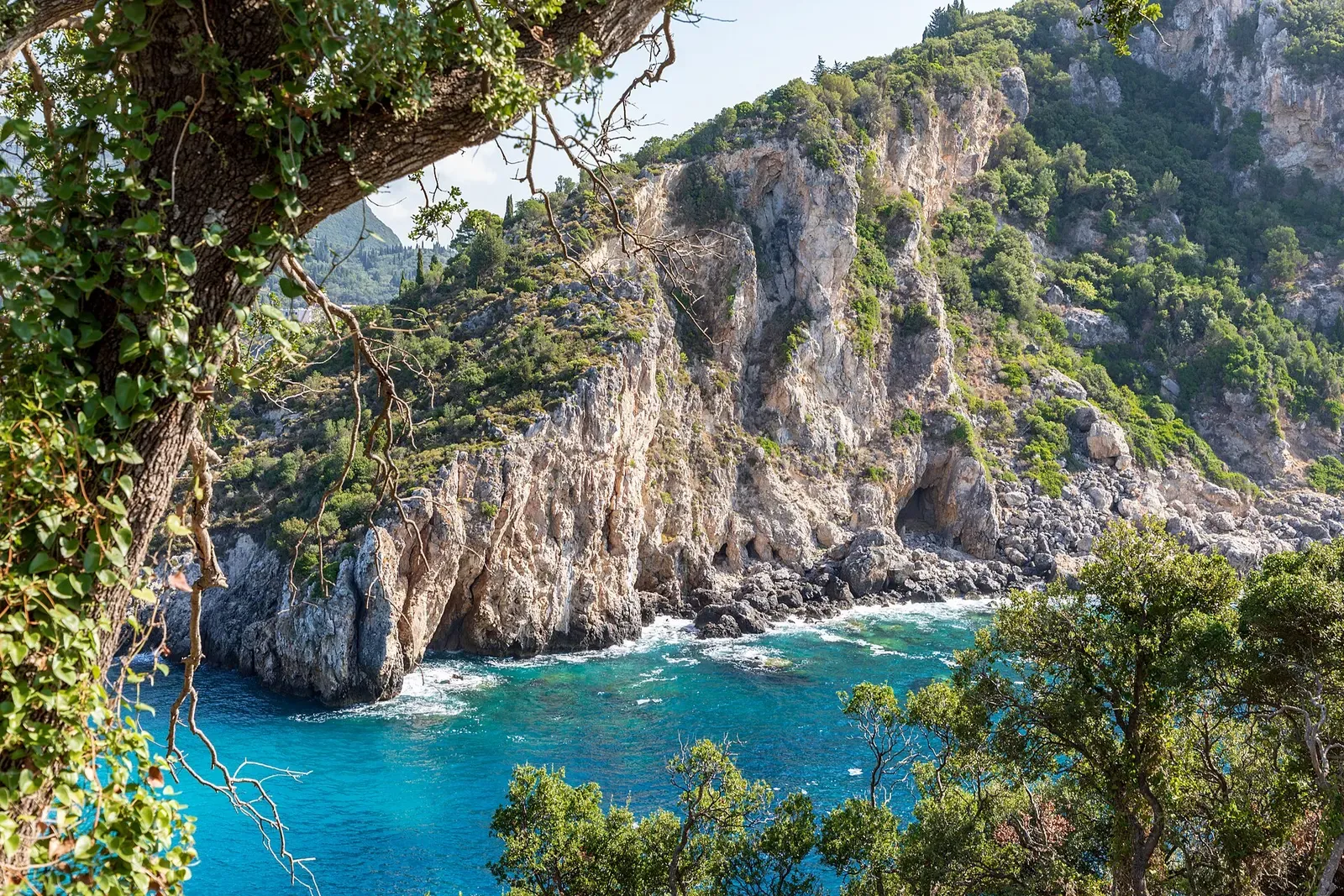
A cluster of cavern dives at Paleokastritsa, wrecks and reefs off the north-east coast

.jpg)
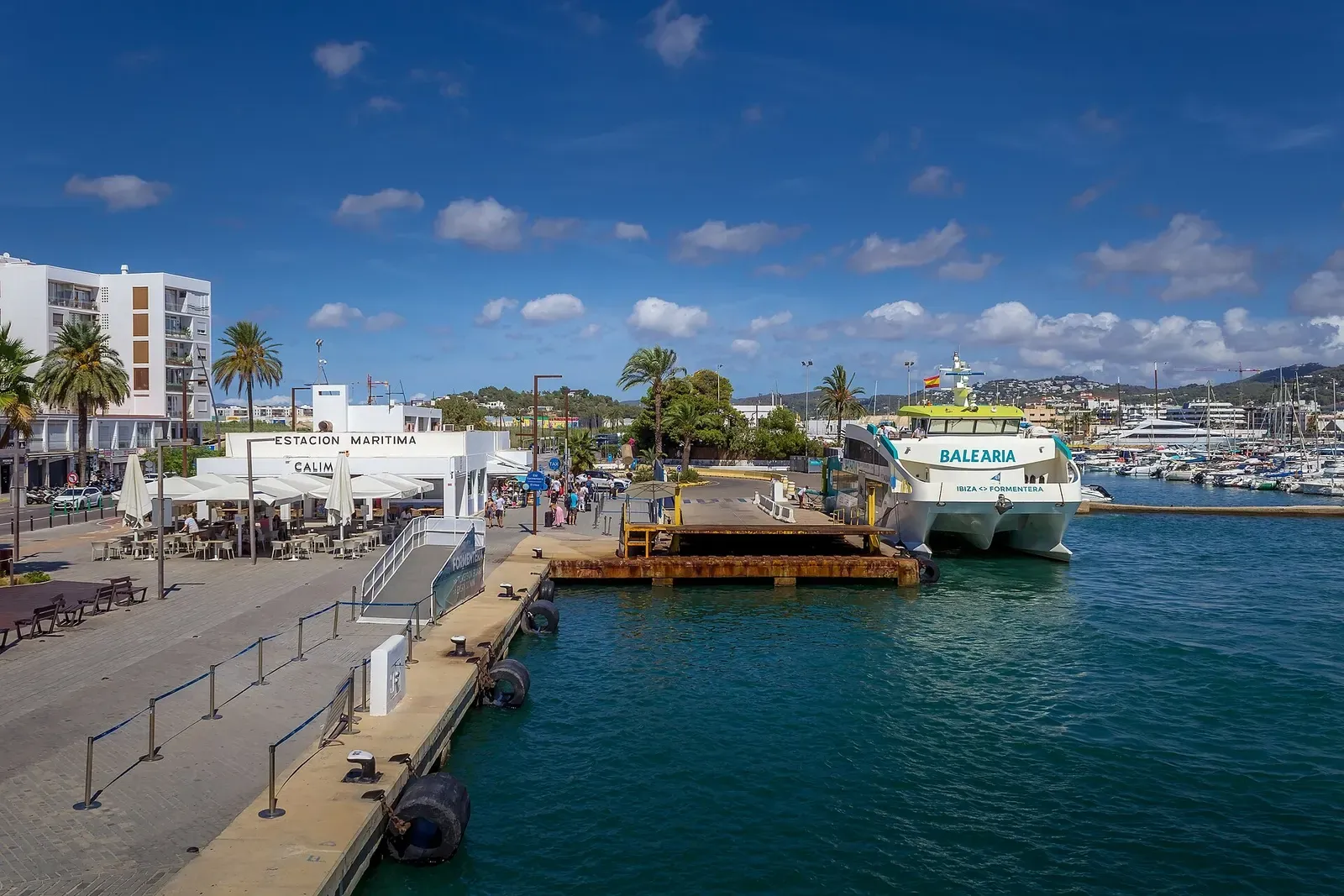
A sunlit limestone cavern, the Don Pedro wreck and the Es Vedrà pinnacles