
Coral Triangle · Philippines
Moalboal
Millions of sardines form a shifting baitball reachable straight from shore.
Photo: Ken Suarez · CC0
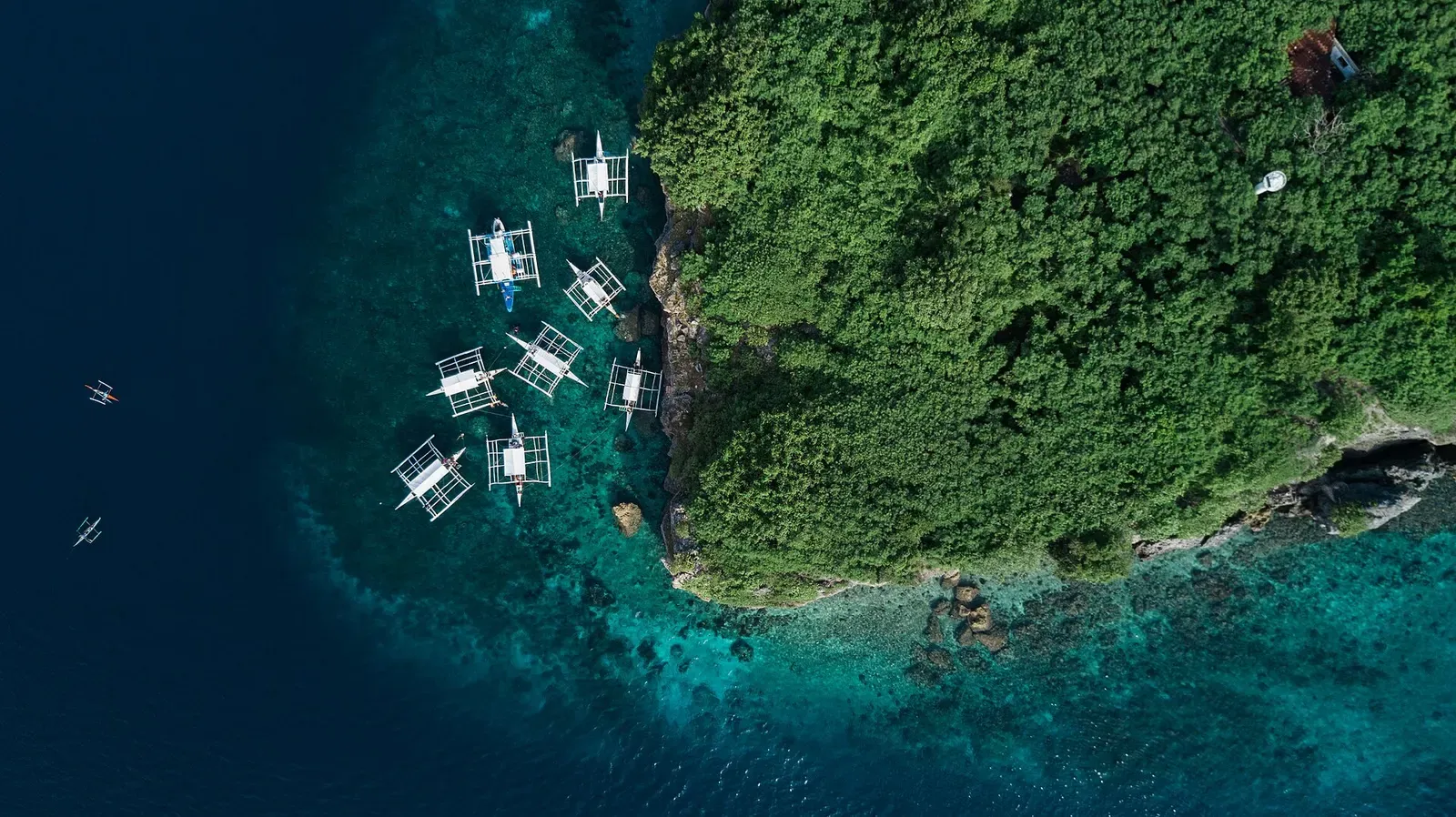
Moalboal, on Cebu's west coast, is known for a resident school of millions of sardines that holds in shallow water directly off Panagsama Beach, forming a dense, shifting baitball that divers and snorkelers can reach by swimming straight from shore. A short boat ride away, Pescador Island offers wall diving with sea turtles and dense reef fish, while the sardine school itself occasionally draws hunting predators up from deeper water.
About diving in Moalboal
Panagsama is a strip of dive shops and small resorts along a shoreline with almost no beach, and that shapes the day. Tanks go down concrete steps or a short jetty, divers fin out over the shallows, and the reef edge drops away a short swim from the entry. Because nothing has to be scheduled around a boat, most people take the house reef whenever it suits them, before breakfast, at dusk or after dark, and keep the outrigger trips for the morning.
Much of this coast is one long drop-off. It runs the length of Panagsama and on past Tongo Point, a coral-covered face broken by cracks and small overhangs, with a shallow shelf on top and blue water below it; at the points the profile eases into slopes of sand and rubble. Pescador sits apart from that pattern, a detached rock walled the whole way round with a chimney cut through it, so a dive there is a circuit rather than an out-and-back along the shore.
The sardines are not a fixed site. The school drifts along the reef edge, sitting off one set of steps one week and further along the shore the next, so guides check where it has settled before anyone gets in. The same body of fish then gets worked from three levels at once, by divers underneath it, freedivers dropping through it and snorkellers looking down from the surface, and the freediving schools that have opened along the strip trade on exactly that.
It suits divers early in their logbook, anyone taking a course, and photographers who want wide-angle and macro subjects on the same day without travelling between them. Costs are low and the walk-in access means a week here needs neither a big budget nor a fixed schedule. Divers after wrecks or reliable big-animal encounters will run out of material quickly; the appeal is one dependable, concentrated event with an easy reef around it.
Best time to dive Moalboal
| Jan | Feb | Mar | Apr | May | Jun | Jul | Aug | Sep | Oct | Nov | Dec | |
|---|---|---|---|---|---|---|---|---|---|---|---|---|
| Season | Fair | Fair | Good | Prime | Prime | Prime | Good | Good | Good | Good | Good | Fair |
| Sea surface | 28°C82°F | 27°C81°F | 28°C82°F | 29°C84°F | 30°C86°F | 30°C86°F | 29°C84°F | 29°C84°F | 29°C84°F | 29°C84°F | 29°C84°F | 29°C84°F |
| Daytime high | 29°C84°F | 30°C86°F | 31°C88°F | 33°C91°F | 33°C91°F | 31°C88°F | 30°C86°F | 30°C86°F | 30°C86°F | 30°C86°F | 29°C84°F | 29°C84°F |
| Rain | 125 mm4.9 in | 89 mm3.5 in | 80 mm3.1 in | 69 mm2.7 in | 163 mm6.4 in | 259 mm10.2 in | 328 mm12.9 in | 309 mm12.2 in | 263 mm10.4 in | 283 mm11.1 in | 176 mm6.9 in | 188 mm7.4 in |
| Jan | Feb | Mar | Apr | May | Jun |
|---|---|---|---|---|---|
| Fair | Fair | Good | Prime | Prime | Prime |
| Sea surface | |||||
| 28°C82°F | 27°C81°F | 28°C82°F | 29°C84°F | 30°C86°F | 30°C86°F |
| Daytime high | |||||
| 29°C84°F | 30°C86°F | 31°C88°F | 33°C91°F | 33°C91°F | 31°C88°F |
| Rain | |||||
| 125 mm4.9 in | 89 mm3.5 in | 80 mm3.1 in | 69 mm2.7 in | 163 mm6.4 in | 259 mm10.2 in |
| Jul | Aug | Sep | Oct | Nov | Dec |
|---|---|---|---|---|---|
| Good | Good | Good | Good | Good | Fair |
| Sea surface | |||||
| 29°C84°F | 29°C84°F | 29°C84°F | 29°C84°F | 29°C84°F | 29°C84°F |
| Daytime high | |||||
| 30°C86°F | 30°C86°F | 30°C86°F | 30°C86°F | 29°C84°F | 29°C84°F |
| Rain | |||||
| 328 mm12.9 in | 309 mm12.2 in | 263 mm10.4 in | 283 mm11.1 in | 176 mm6.9 in | 188 mm7.4 in |
2011–2025 averages. Sea surface: NOAA Coral Reef Watch, measured at the surface, so deeper water can run colder. Daytime high and rain: NASA POWER.
Diveable year-round; the sardine school is present nearly every day regardless of season.
Moalboal water temperature and weather by month
The sea surface runs from 27 °C (81 °F) in February to 30 °C (86 °F) in June. Most rain falls from June to October, peaking at about 330 mm (13 in) in July; February to April are the driest. Daytime highs reach 33 °C (91 °F) in May and drop to 29 °C (84 °F) in January. The coldest water here is about 26 °C (79 °F), so pack a 3 mm full suit.
Dive types & marine life
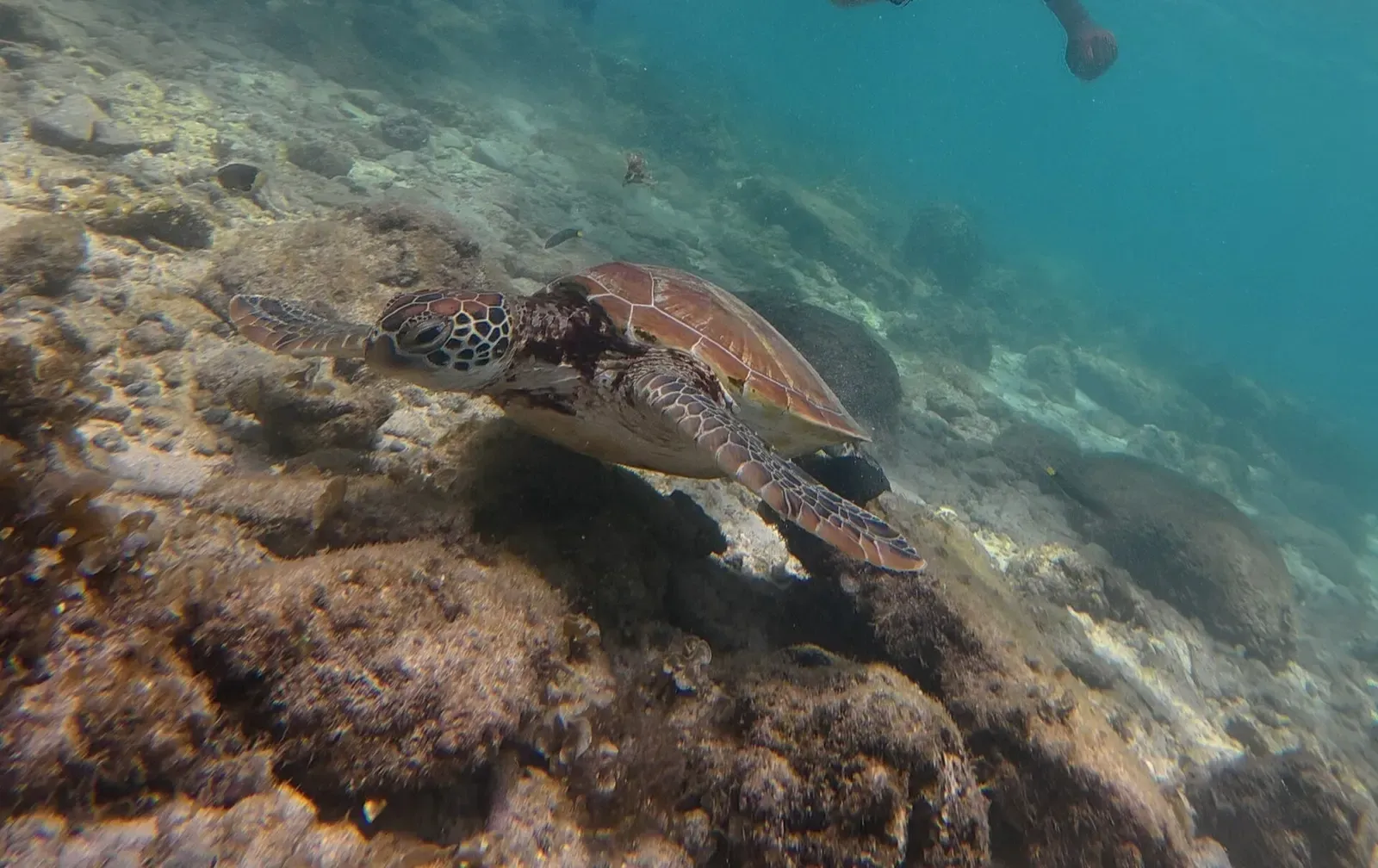
Turtles graze the shallows and hold along the drop-off in any month, usually settled enough for divers to pass close. Frogfish and nudibranchs are steady work on the slopes at Tongo Point, best on calm days when the sand stays down. April to June is the flattest, clearest window, and the one to plan the deeper wall dives around.
- Reef
- Wall
- Muck & macro
- Sardine baitballs
- Sea turtles
- Frogfish
- Nudibranchs
- Reef fish swarms
Best dive sites in Moalboal
Wreck
A two-seat aircraft sunk on sand at 20 m, with a wall beyond
Reef
Coral slope that steepens into a wall at about 20 m
Wall
Coral shelf, a wall to 40 m, and a 140 m cave at its foot
A coral wall running from a 5 m shallow top down to 55 m
Muck & macro
Shallow sand and boulders in 5 to 10 m, minimal current
A million-plus sardines holding a short swim off the dive shops
An open-top cave in the northwest wall of a limestone island
Protected wall from 18 m to 55 m, hung with gorgonian fans
Wall
Sanctuary wall with small caves and steady turtle sightings
Wall
Sanctuary wall from 3 m to 40 m with sea fan forests
Sand slope
Sandy slope that becomes a wall at around 22 m
Wall edge 30 m from shore, its foot at 60 to 70 m
How to get to Moalboal
Mactan-Cebu is the gateway, followed by a van or bus ride across the island to Panagsama, where the shops and small resorts sit side by side. Outriggers leave straight off the shore for Pescador and the points, and much of the rest is walk-in, so no vehicle is needed once you have arrived.
Photos from Moalboal
lakshmioct01 · CC BY 2.0
lakshmioct01 · CC BY 2.0
lakshmioct01 · CC BY 2.0
Dan Schofield · CC BY 4.0
Dive videos
Dive the Philippines: Scuba Diving in the Sardine Run at Moalboal, Cebu · Scuba.com on YouTube
Scuba Diving The Philippines - Pescador Island #moalboal #pescadorisland #scubadiving · Scuba Diving and Dogs on YouTube
Photo credits
- Aerial view of forested Pescador Island surrounded by turquoise reef with dive boats moored offshore. by Ken Suarez, CC0, via Wikimedia Commons
- A diver's silhouette swims through a swirling tunnel opened up in the dense sardine school off Panagsama Beach. by lakshmioct01, CC BY 2.0, via Openverse
- A green sea turtle rests among soft coral and sea fans on a Moalboal reef. by lakshmioct01, CC BY 2.0, via Openverse
- Orange anthias school over golden staghorn coral on a sunlit Moalboal reef. by lakshmioct01, CC BY 2.0, via Openverse
- A spiky orange and black chocolate chip sea star rests on algae-covered rubble. by Dan Schofield, CC BY 4.0, via Wikimedia Commons
Embed
Run a dive centre, club or blog? Embed this map of 12 dive sites near Moalboal on your own page.
In The Logbook
- Where to dive with sea turtlesBig animals · 15 min read
- The best wall dives in the worldWalls & drop-offs · 11 min read
- Malapascua thresher sharks: Monad or Kimud?Big animals · 11 min read
- Cheapest places to scuba dive, and the catchTrip planning · 15 min read
- Where to dive with whale sharks, month by monthBig animals · 16 min read
- Liveaboard vs resort diving: which suits you?Trip planning · 6 min read
- The best shore dives in the worldShore diving · 8 min read
Similar destinations
Walls from 5 m past 60, and a dive base of its own

Napaling's resident sardine shoal, and the base for all of Bohol
A limestone wall the length of the coast, dived by almost nobody

.jpg)

Soft coral grows so thick on Sahaung's pinnacles the rock disappears